
Scaling Indeed Resume Services 8X in Year Two
Summary
Indeed’s first paid job seeker product Resume Services offered strong value but struggled in its first year to scale acquisition, conversion, engagement, and ecosystem impact. I led a redesign of the end-to-end service experience, applying behavioral design, mixed-methods research, and growth experimentation to uncover what drives user trust and decision-making. By the second year, the business achieved 8× revenue growth, rebuilt two services, expanded two new paid offerings, and supported 4M+ job seekers. End-to-end conversion improved from 0.5% to 2%, transforming Resume Services into a scalable business within the Indeed ecosystem.
My Role
Lead Designer
Company
Indeed
Date
2021
Scope
12 months; 23 XFN partners across PM, UXR, Content, Engineering, Data Science, QA, Marketing, Resume editing team, Visual design, and partner product teams
Background
Job seekers often feel anxious about presenting themselves effectively through their resumes, while employers struggle with receiving low-quality applications. Indeed Resume Services was developed to bridge this gap, offering both free and paid professional resume assistance.
In its first year, the service showed potential with ~9k users and a 0.5% end-to-end conversion rate. However, scaling the business required expanding user acquisition and improving conversion rates.
Shape Product Scaling Strategy
To address the challenges, I started with an opportunity mapping that combined quantitative data analytics und qualitative user insights to uncover opportunities and prioritize initiatives when joining the team.
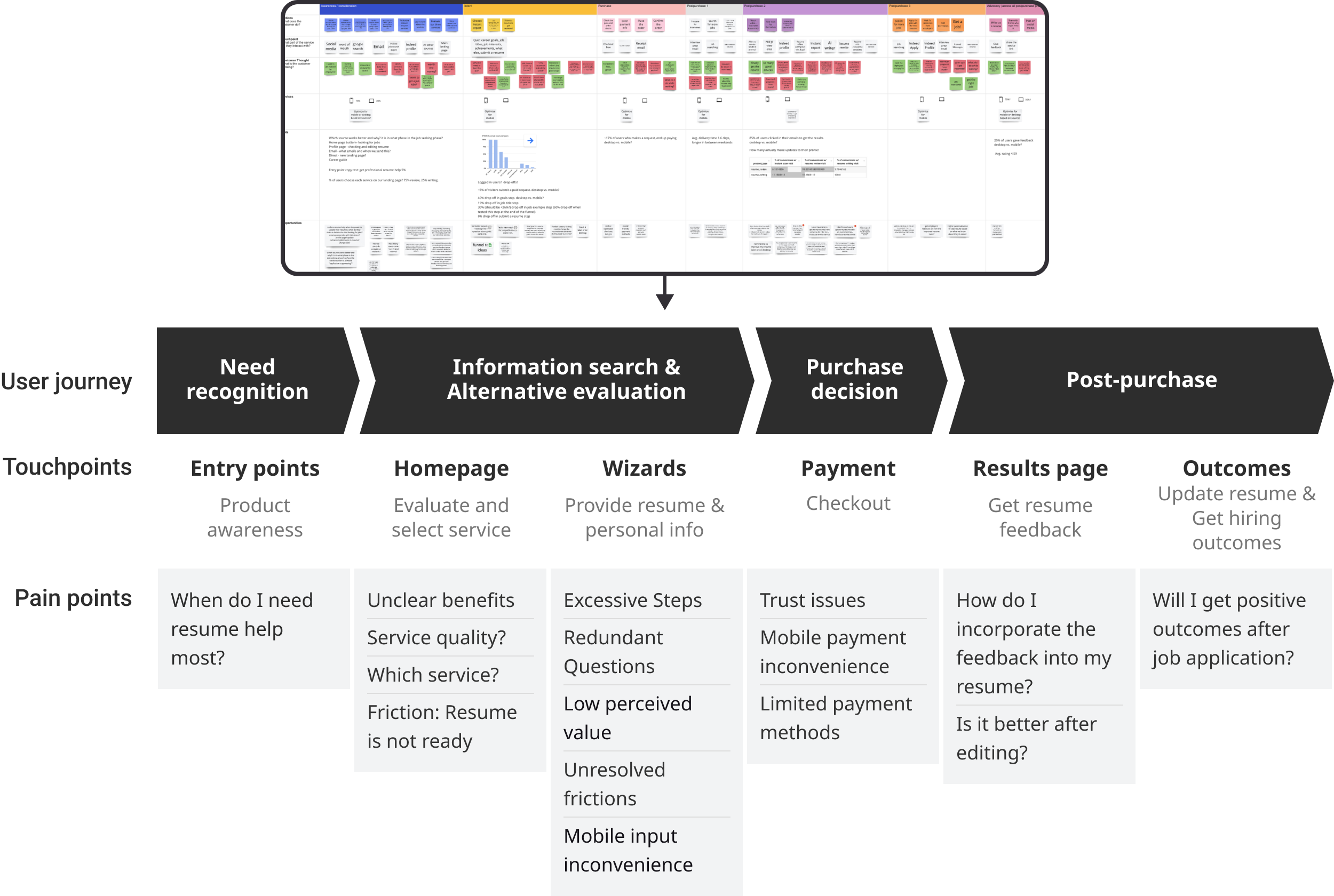
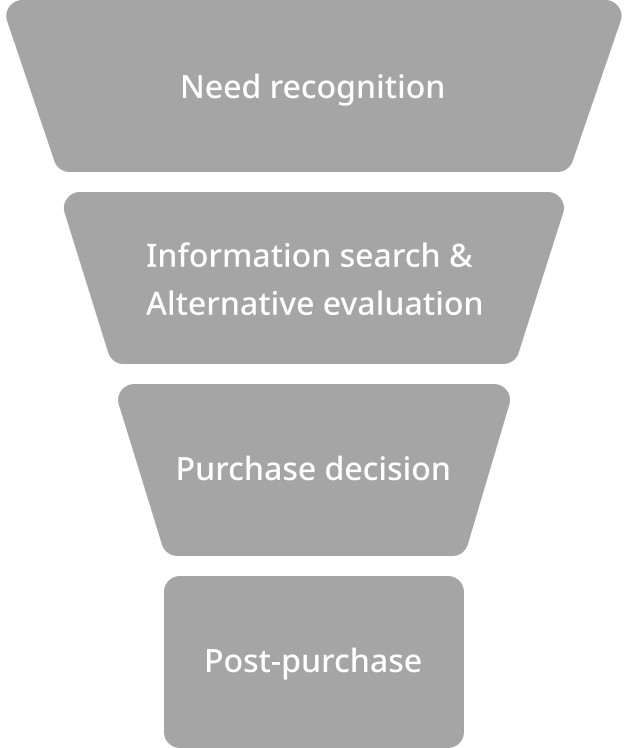
Using a consumer purchase decision-making model, I defined the end-to-end user journey and identified three critical product-level challenges and opportunities:
- Need recognition stage – Despite having 20+ traffic sources, it was unclear why certain entry points significantly outperformed others.
- Purchase funnel stage – We were losing 99.5% of users from Homepage through the conversion funnel.
- Post-purchase stage – Our measurement of key behaviors, such as resume updates, and downstream impacts, like hiring outcomes, was limited.
Based on this mapping, I worked with product team to prioritized four strategic focus areas in year two, ultimately growing revenue 8X year-over-year. This case study focuses on the first three areas:
4.
Measure and amplify ecosystem impact: helped 4M+ job seekers improve their resumes
1. Improve Entry Points and Traffic
Problem
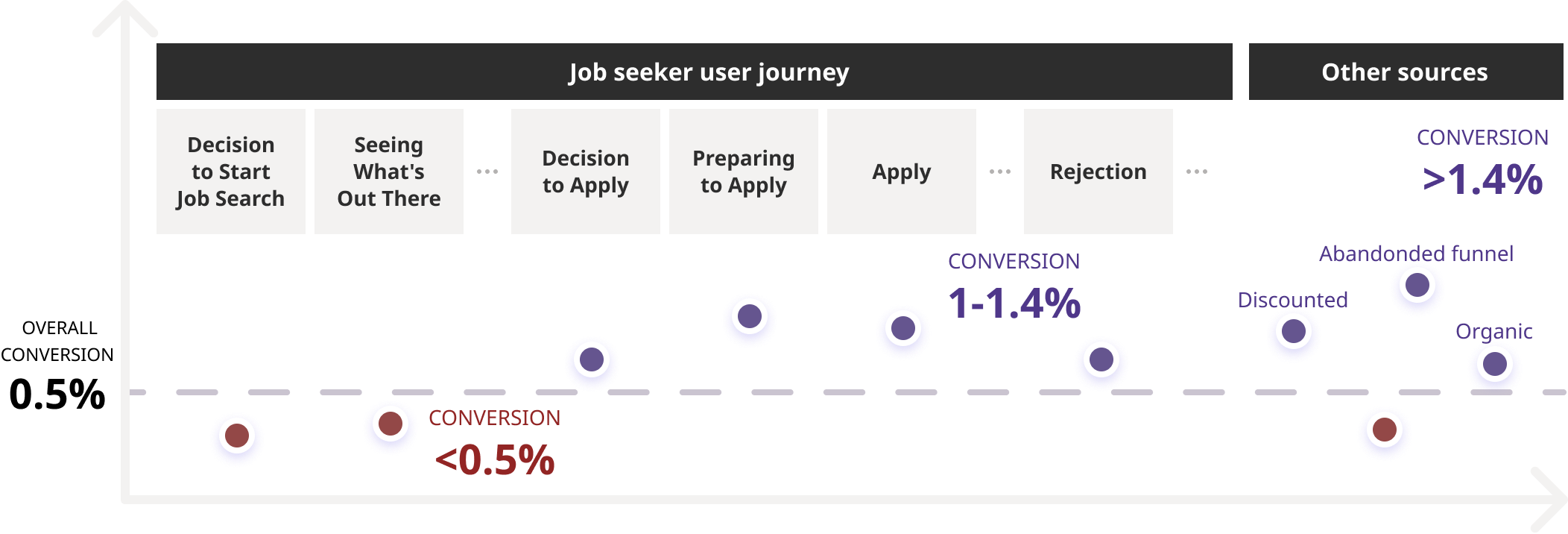
The business had over 20 internal and external entry points, but conversion rates varied dramatically. It was unclear when job seekers needed resume help most or why certain entry points performed better.
Strategy
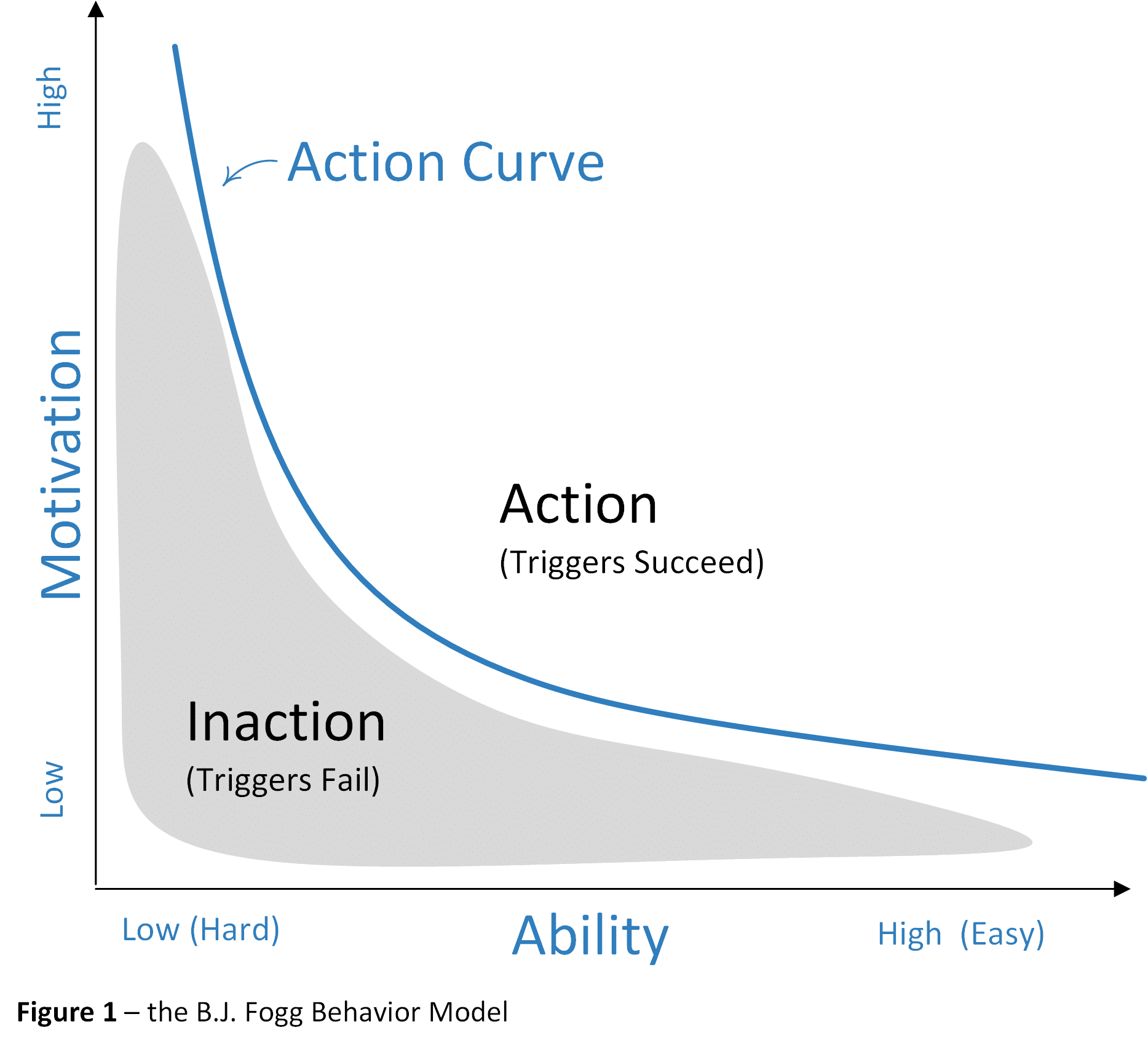
Leveraging the Fogg Behavior Model (motivation, ability, prompt), I cross-referenced conversion data with qualitative insights to design an acquisition strategy:
- Identify high-impact moments in the user journey
- Boost user motivation
- Reduce friction
- Deliver the right prompts at the right time
Solution
We then ideated on motivation, ability, timing, and prompt messaging, and tested 7 high-impact acquisition moments across the Indeed ecosystem, including:
- When job seekers had strong apply intent
- When they were editing resumes
- When they faced rejections
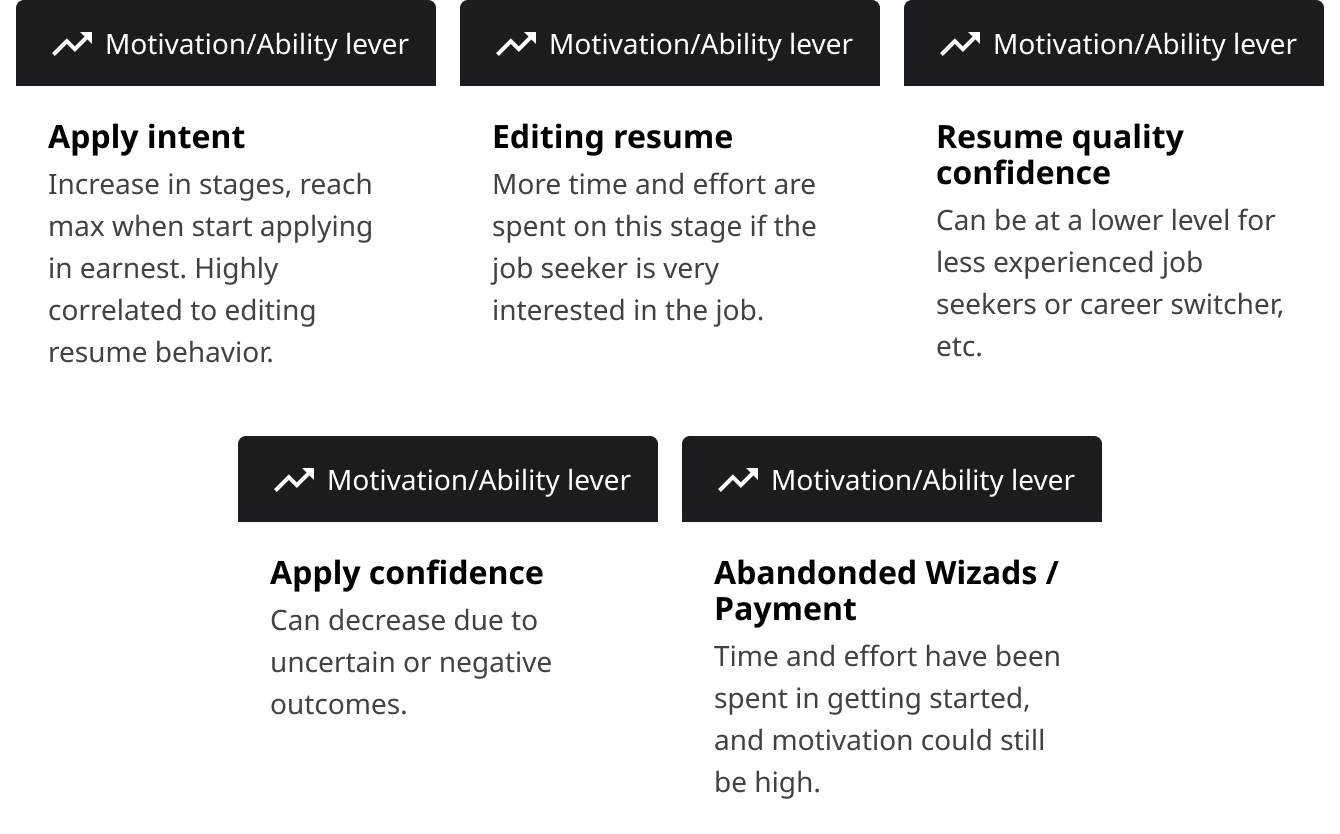
Ideated on motivation, ability, and prompt timing based on behavioral science
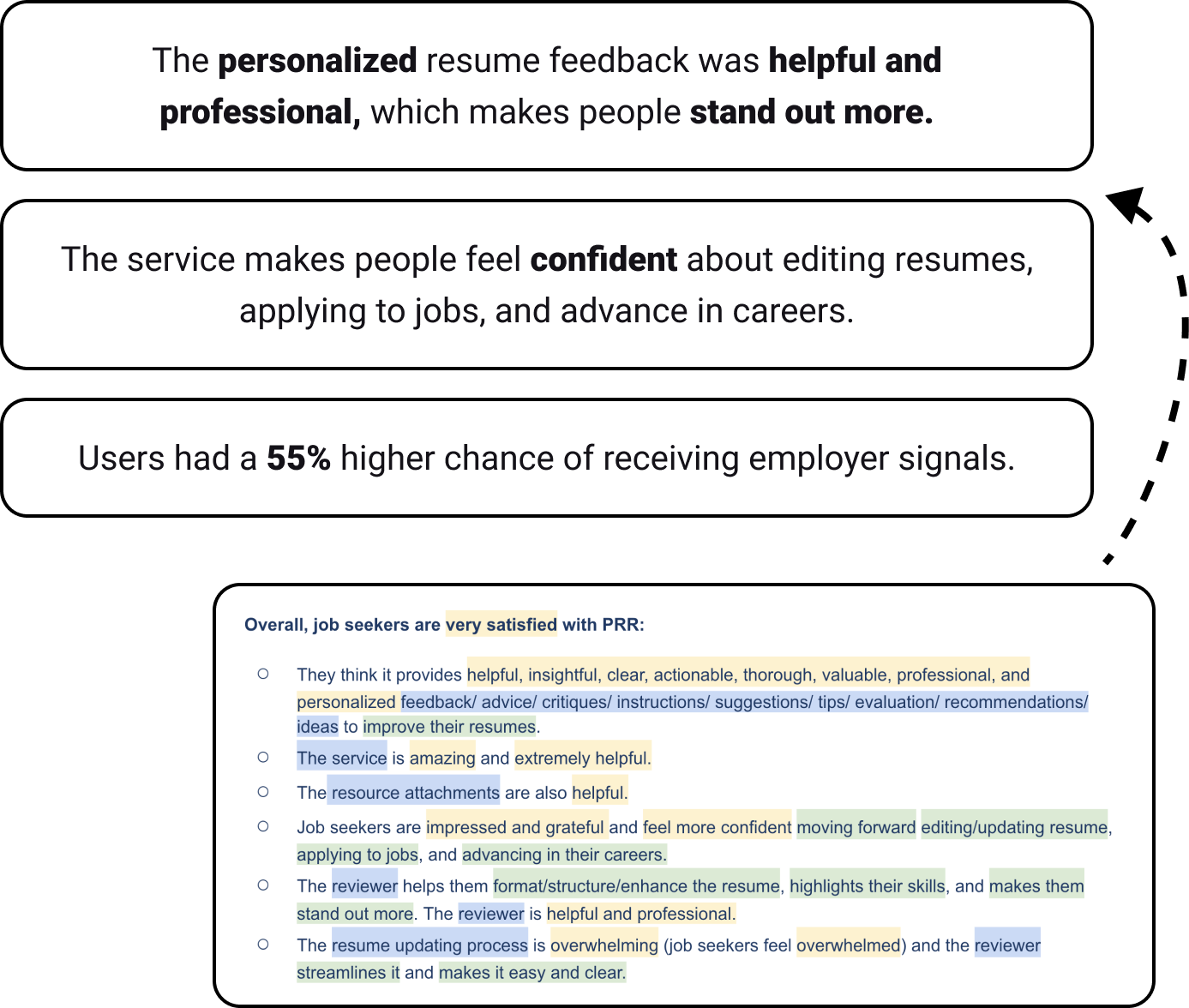
Ideated on prompt messaging from customer review keyword analysis and data analysis
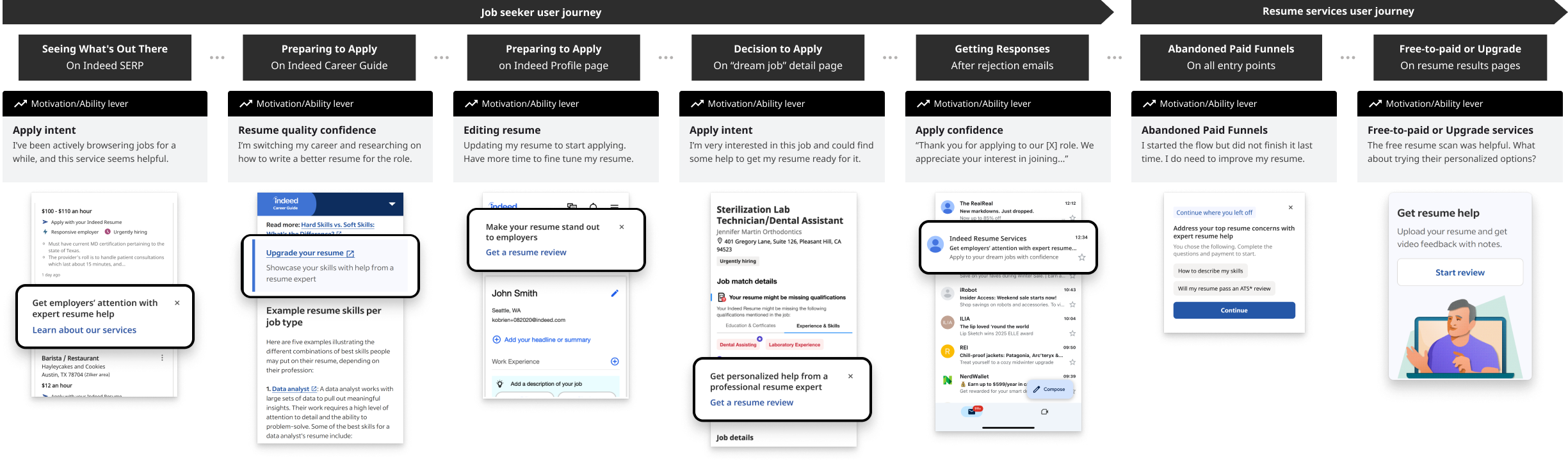
We targeted 7 high-impact acquisition moments across the Indeed ecosystem, addressing varying user motivation, ability, timing, and messaging. *The design styles varied due to brand identity changes.
Outcome
This strategy drove a 400X YoY increase in traffic volume in year two.
2. Boost Homepage Conversion
Problem
We offered four resume services on the homepage (including two new offerings), but qualitative research revealed key challenges:
- Low value perception and differentiation: “Which service should I choose, and how do they differ?”
- Low abilities to act: “I’m not ready to upload my resume yet.”
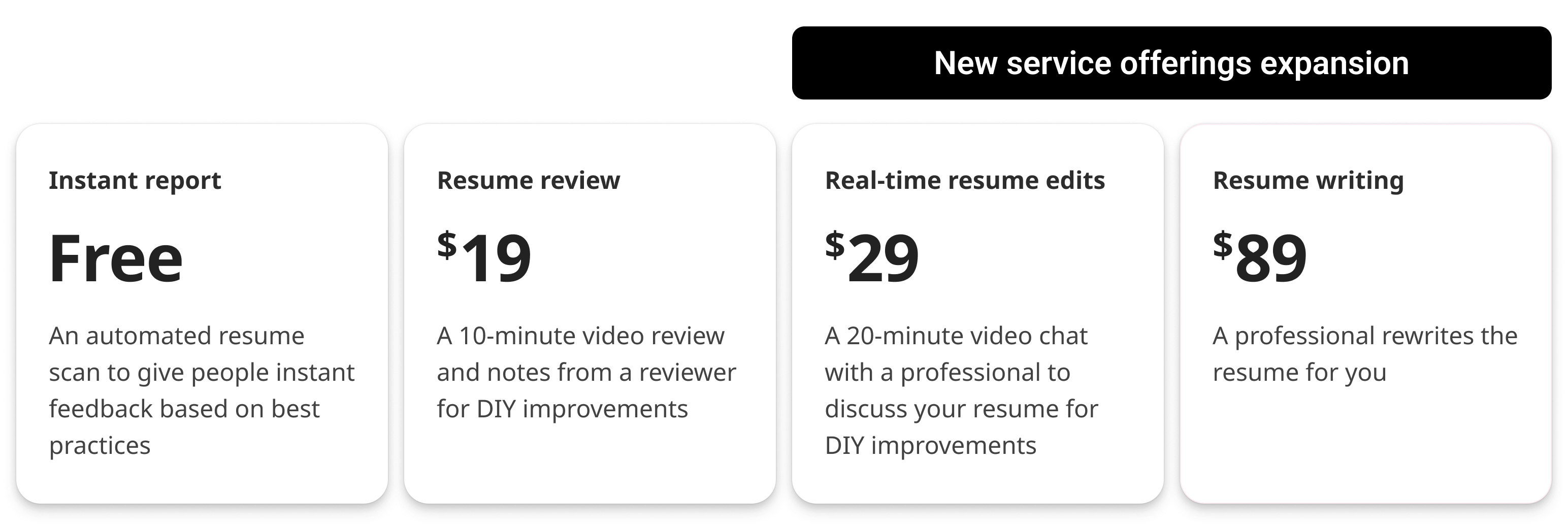
Behavioral data further highlighted the barriers:
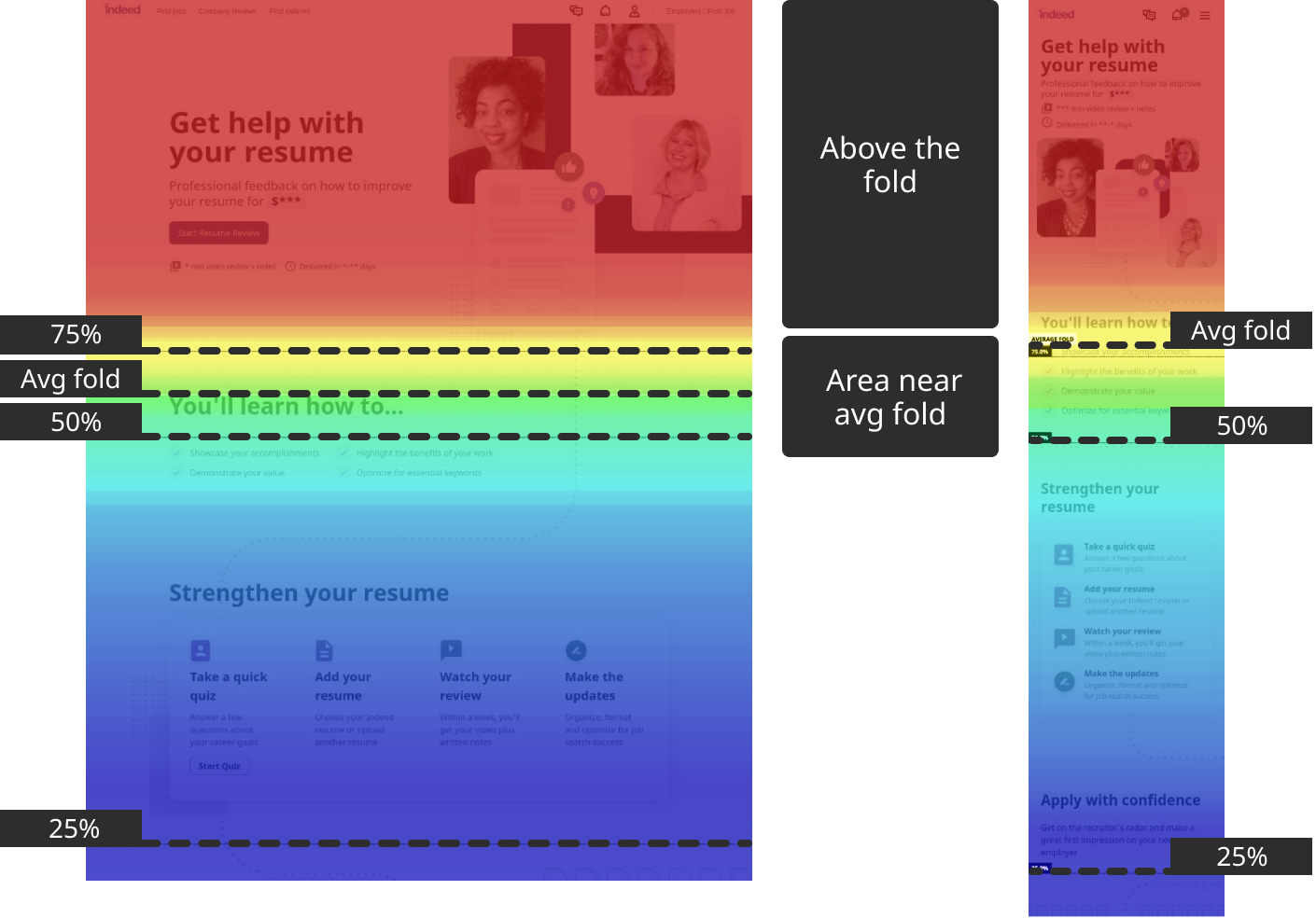
- Weak above-the-fold appeal (only 25% scrolled down)
- High abandonment (>80% homepage drop-off)
- Usability issues
Strategy
To help users evaluate and select resume services effectively, we focused on five key strategies:
- Reduce high drop-offs
- Improve holistic value perception
- Deliver clear and differentiated value propositions
- Drive immediate actions
- Building dynamic homepage testing concepts
Solution
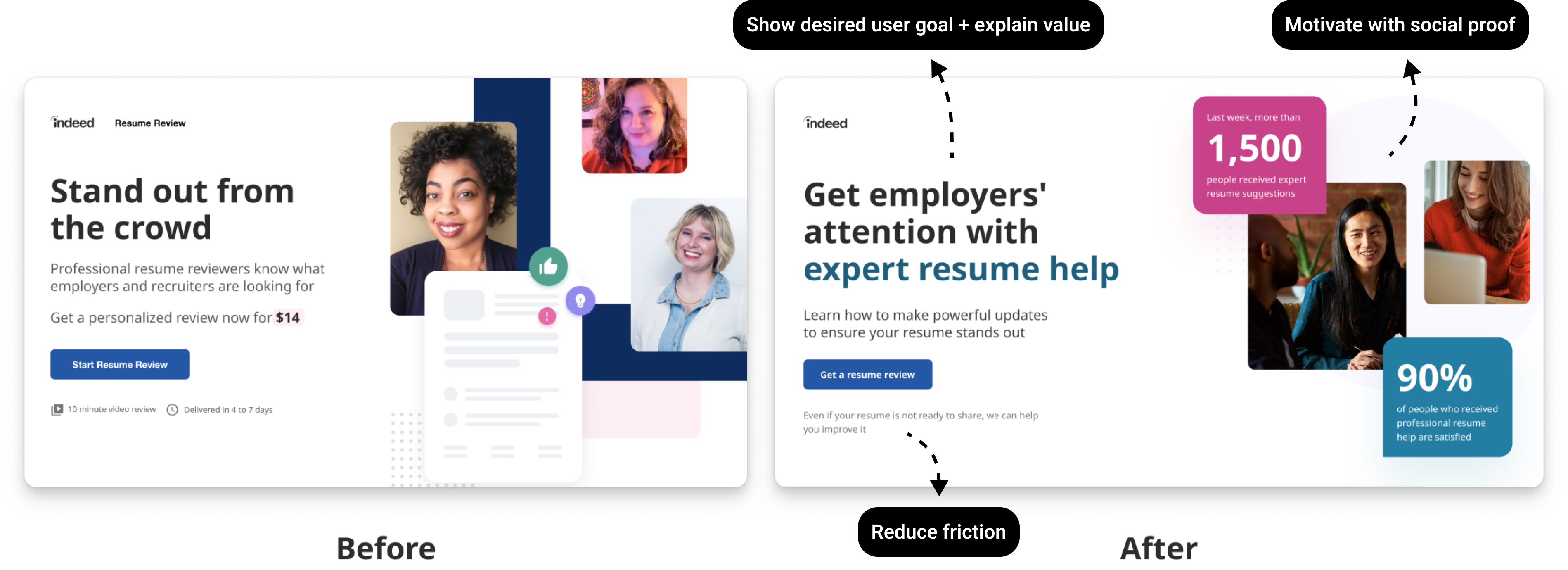
Reducing high drop-offs: make the first fold appealing
Prioritized high-impact content above the fold
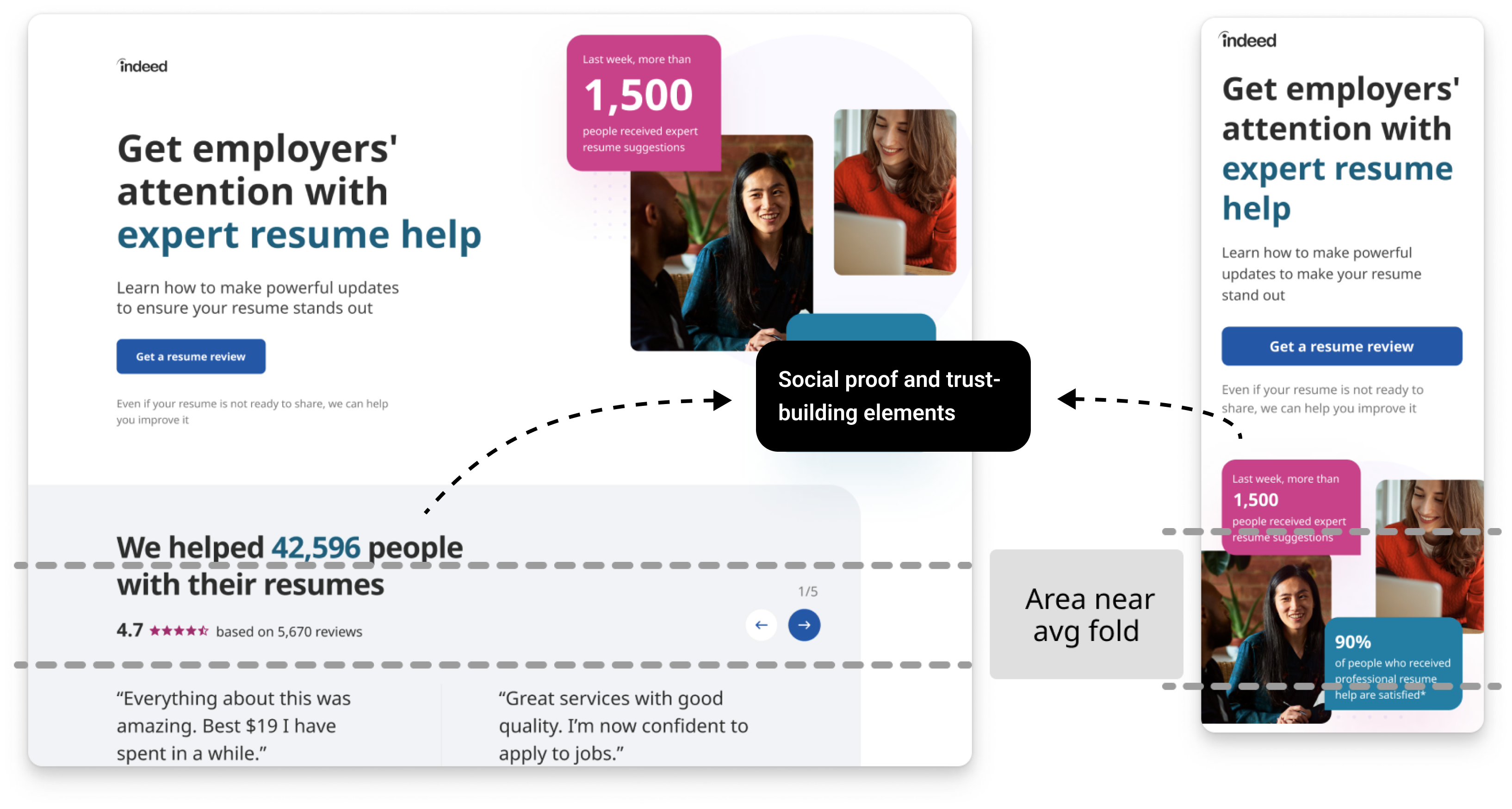
Designed visual cues to encourage scrolling near the average fold
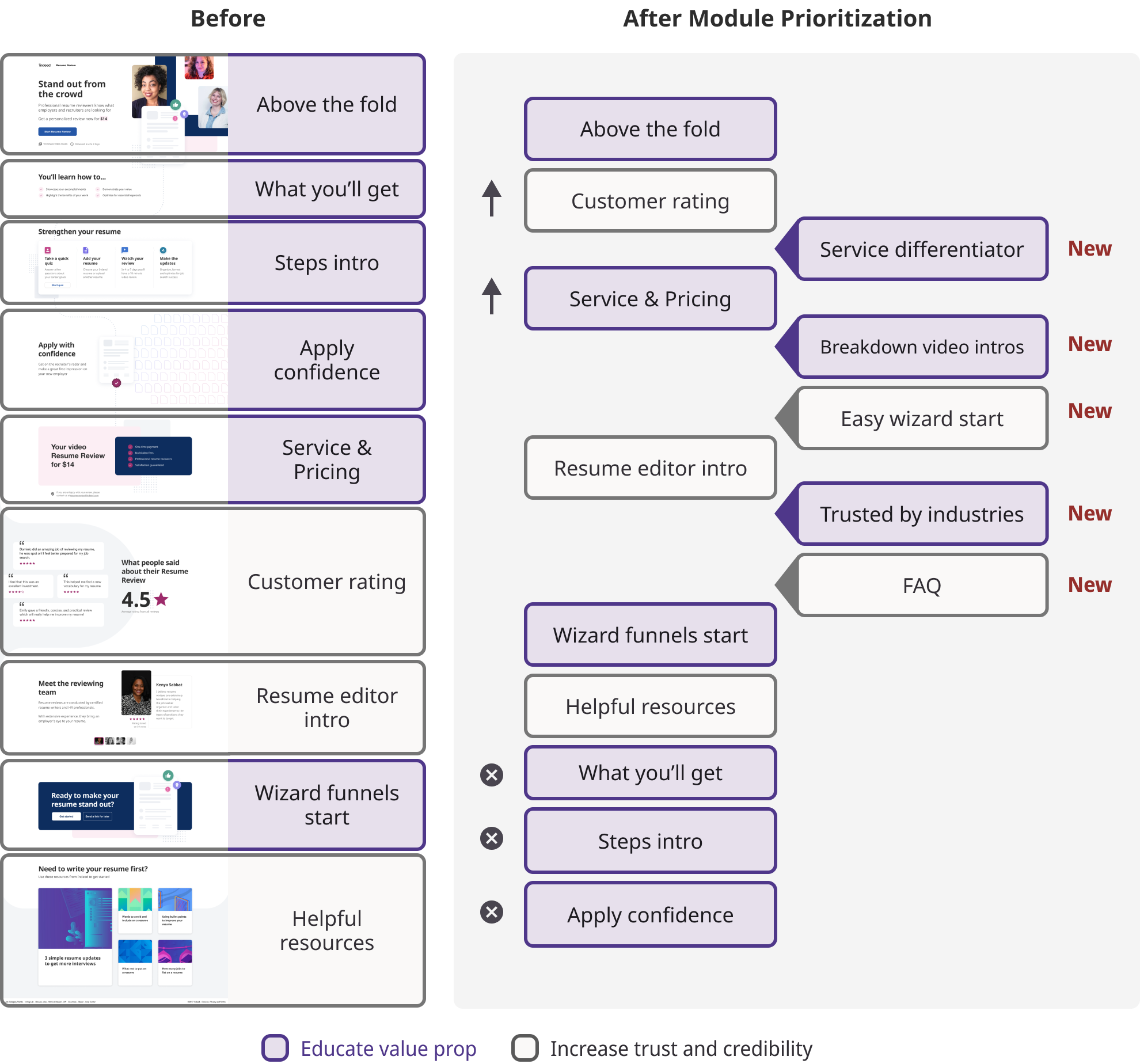
Improving holistic value perception: test homepage composition
Prioritized educational and trust-building content
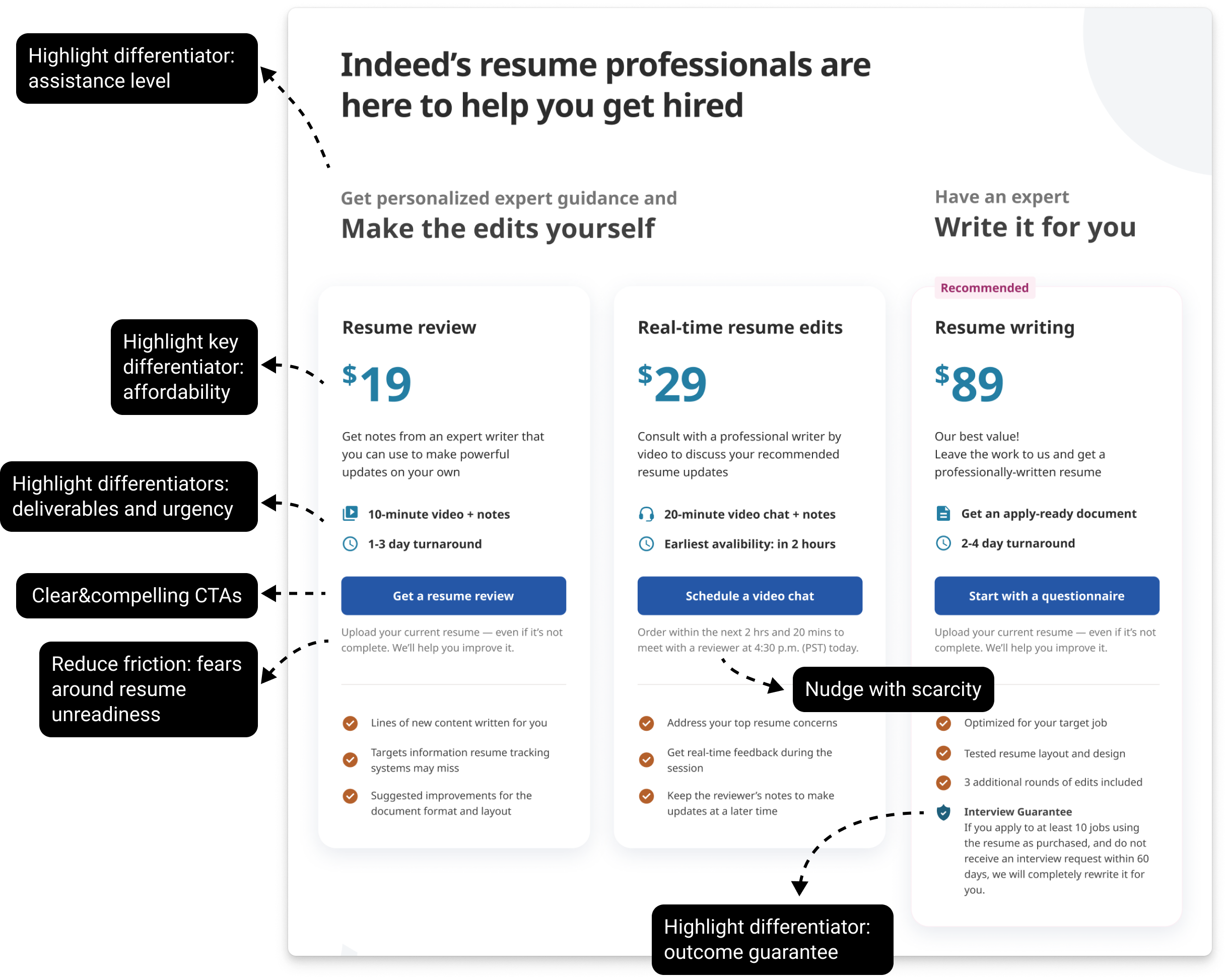
Delivering clear and differentiated value propositions: iterate on Service & Pricing
Early concepts revealed value gaps, friction from resume unreadiness, and uncertainty in perceived outcomes. I then collaborated with marketing and content design to refine messaging and pricing structures.
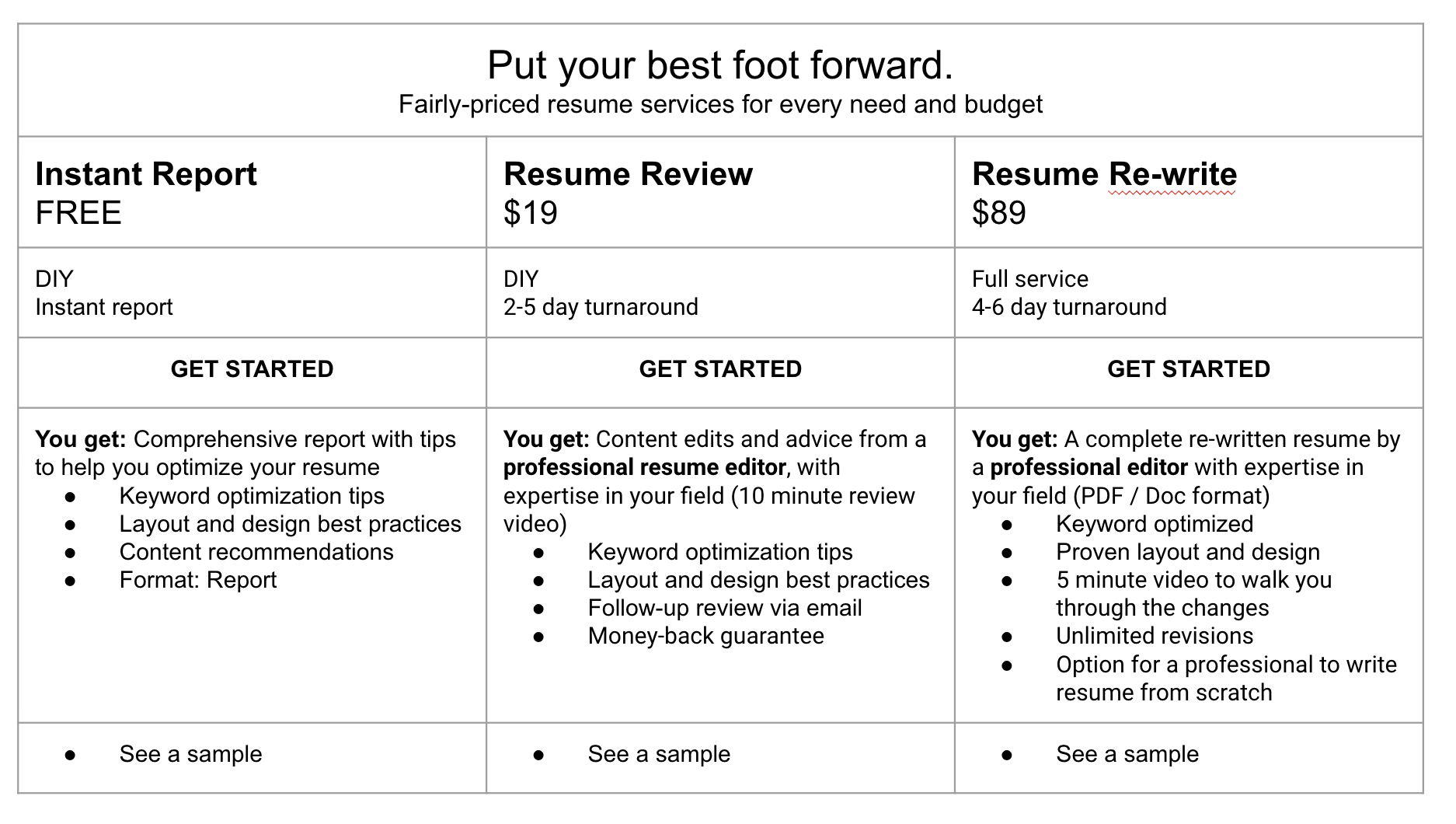
After five iterations with extensive a/b testing and research studies:
- High comprehension and perceived value: users demonstrated a strong understanding of services and their differentiators
- Competitive pricing advantage: Indeed perceived as more affordable vs. alternatives
- Streamlined funnel start: users found the entry process straightforward and intuitive
Drive immediate actions: engaging service start modules
Placing engaging service start modules with actionable prompts prominently on the homepage
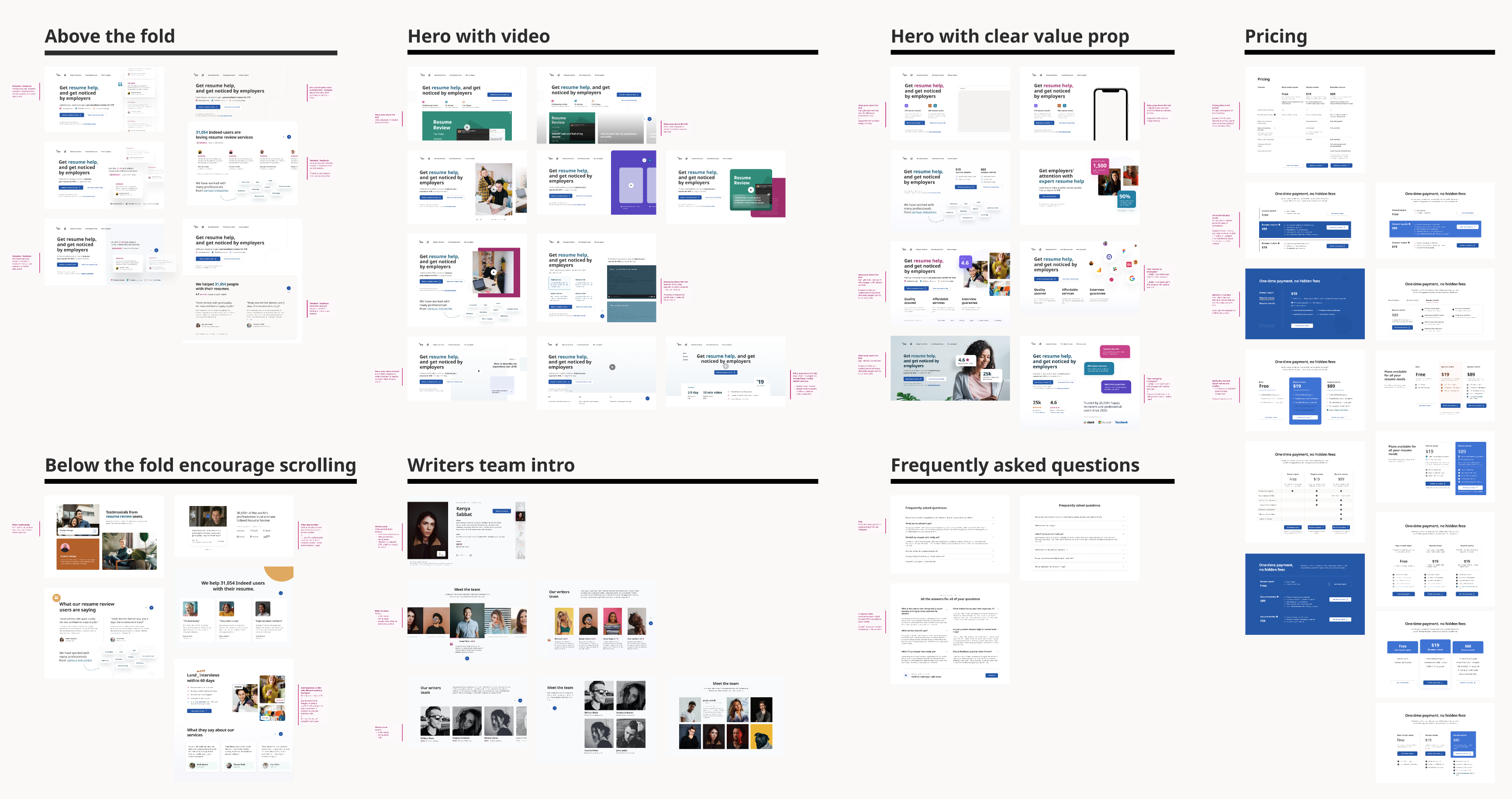
Building dynamic homepage concepts: iterative testing framework
As the product scaled, challenges grew: more complex decision-making, varying motivation, and risk of attention loss.
I partnered with visual design team to design and test multiple variations of each homepage module. Through iterative testing and recombination, we developed a scalable framework to adapt the homepage to different user groups and evolving needs.
Outcome
- 50% increase in homepage conversion rate
- Launched two new paid services
- Improved trust and value communication
- Established a scalable homepage testing framework for dynamic needs
"They do a pretty good job of covering everything and setting expectations. It really makes it easy to understand exactly what I'm getting and how much I’m paying. The process was very straightforward." — Usability testing participant

3. Improve the Purchase Conversion Funnel
Problem
Over 97% of users dropped off the purchase funnel due to:
- Lengthy and frustrating steps (especially on mobile)
- Low perceived value
- Trust and payment convenience issues
We redesigned the purchase funnel experiences for all four free and paid resume services to address the challenges and improve conversion. Here are two examples.
Solution 1: Redesign Resume Review purchase funnel
Painpoints
Through behavior analysis, user interviews, and conversion data analysis, I identified key challenges for both users and resume reviewers:
- Job seekers: excessive 11 steps; redundant questions; unclear value
- Resume reviewers: low-quality input; inefficient workflow

Opportunities
By turning challenges into opportunities, how might we:
- ...define the minimum required information for a quality resume review?
- ...make it easier to input information, especially on mobile?
- ...set clear expectations about the benefits?
- ...streamline workflows to empower reviewers to work efficiently?
Solution
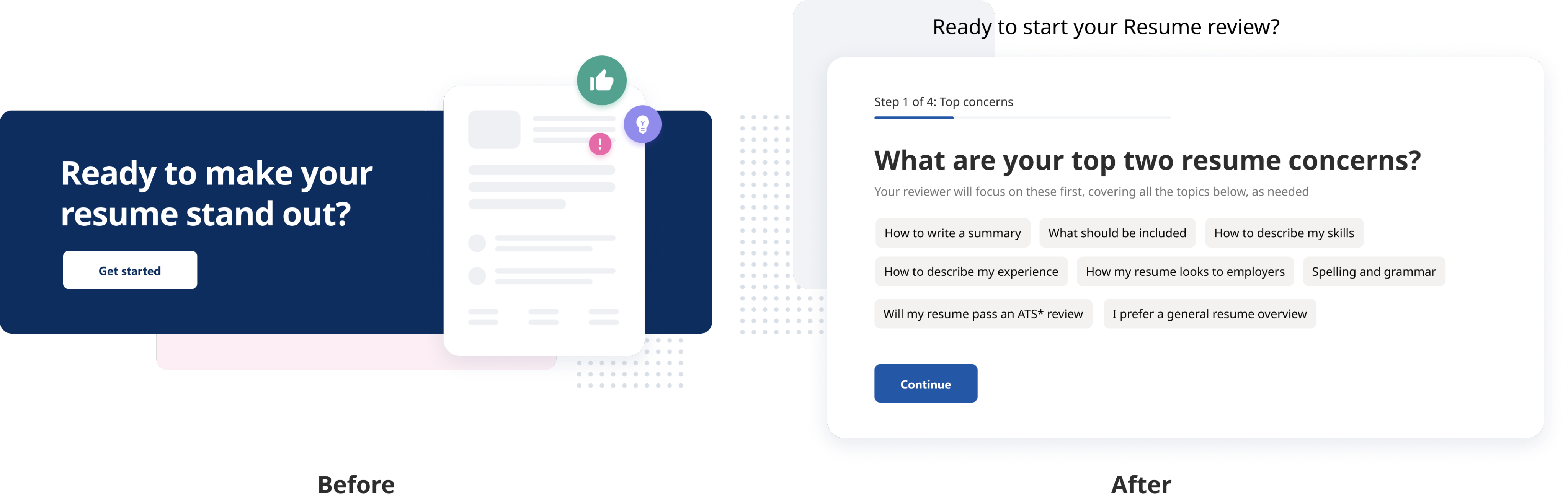
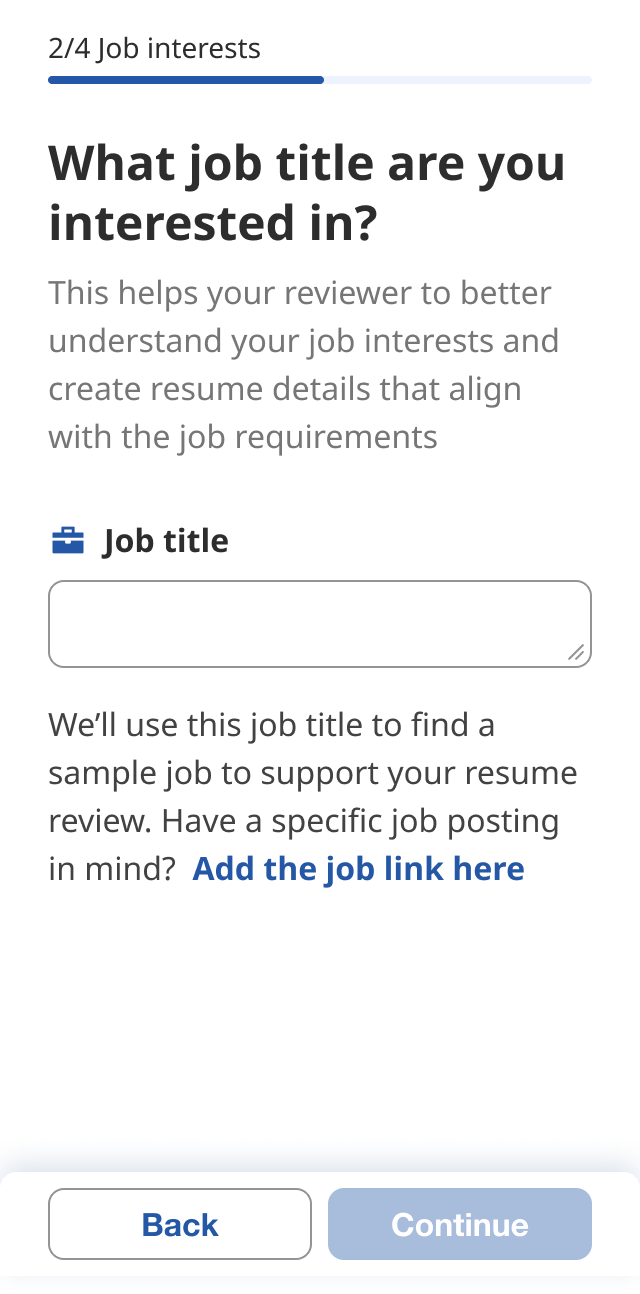
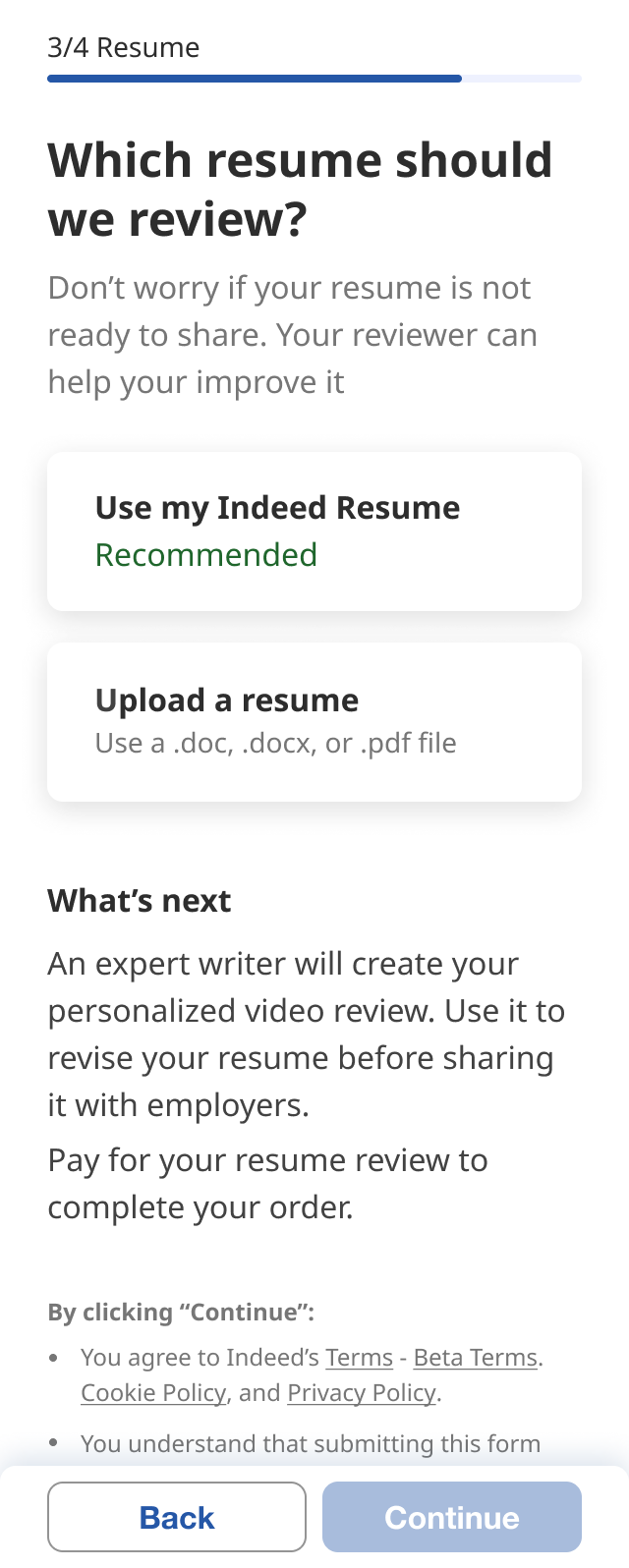
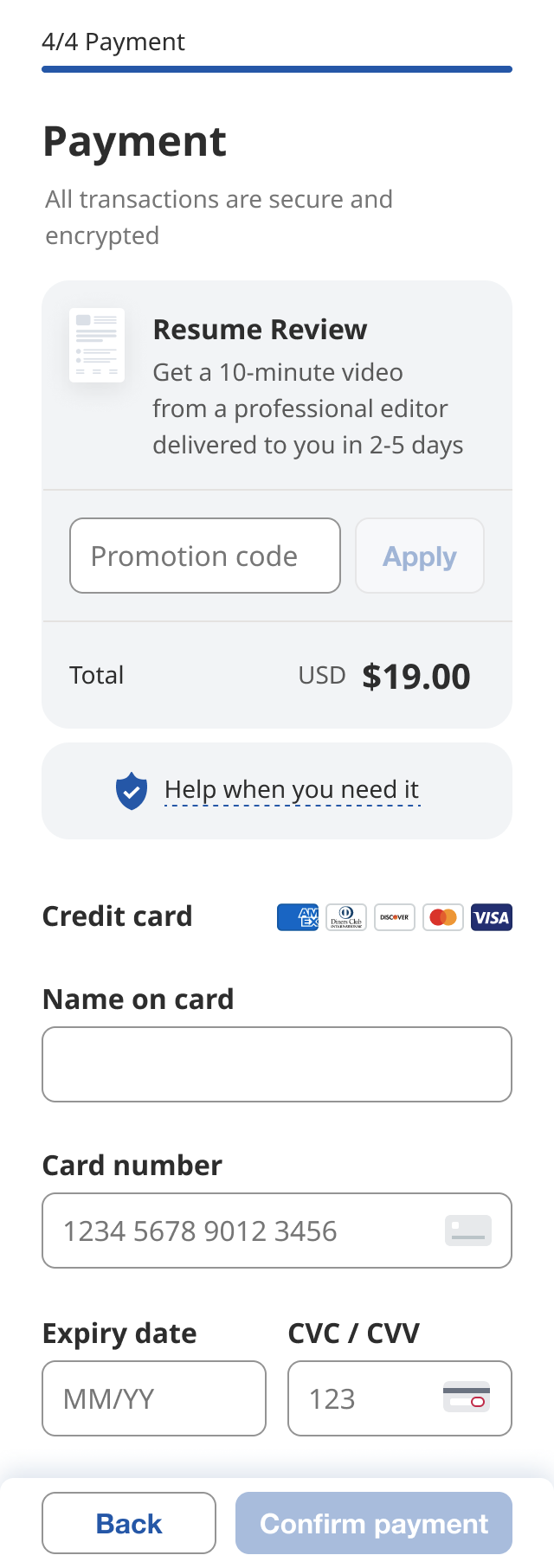
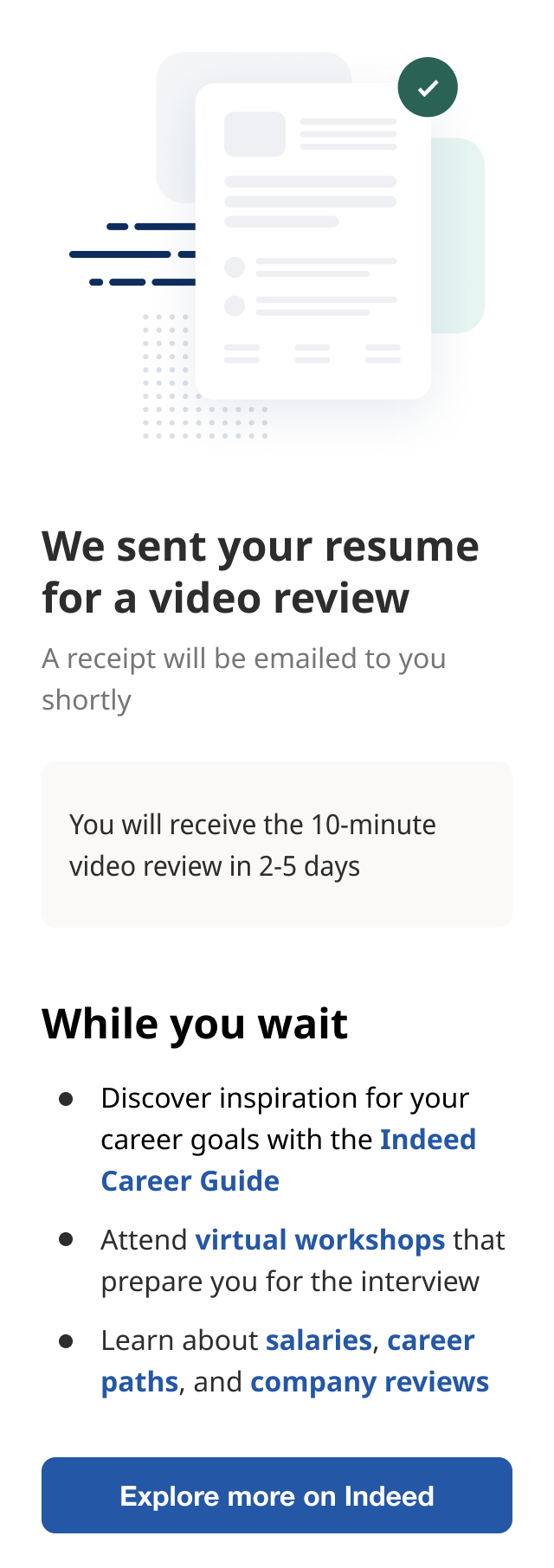
- Reduced steps from 11 to 4 essential inputs
- Streamlined workflows for reviewers
- Made the experience from functional to exceptional by adding new steps and reordering steps
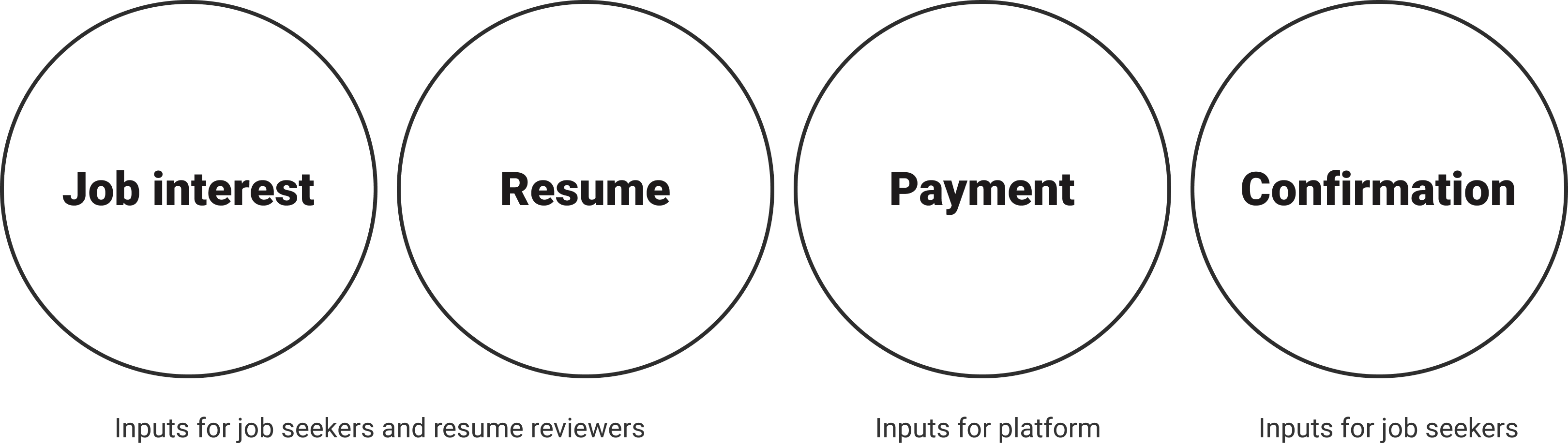
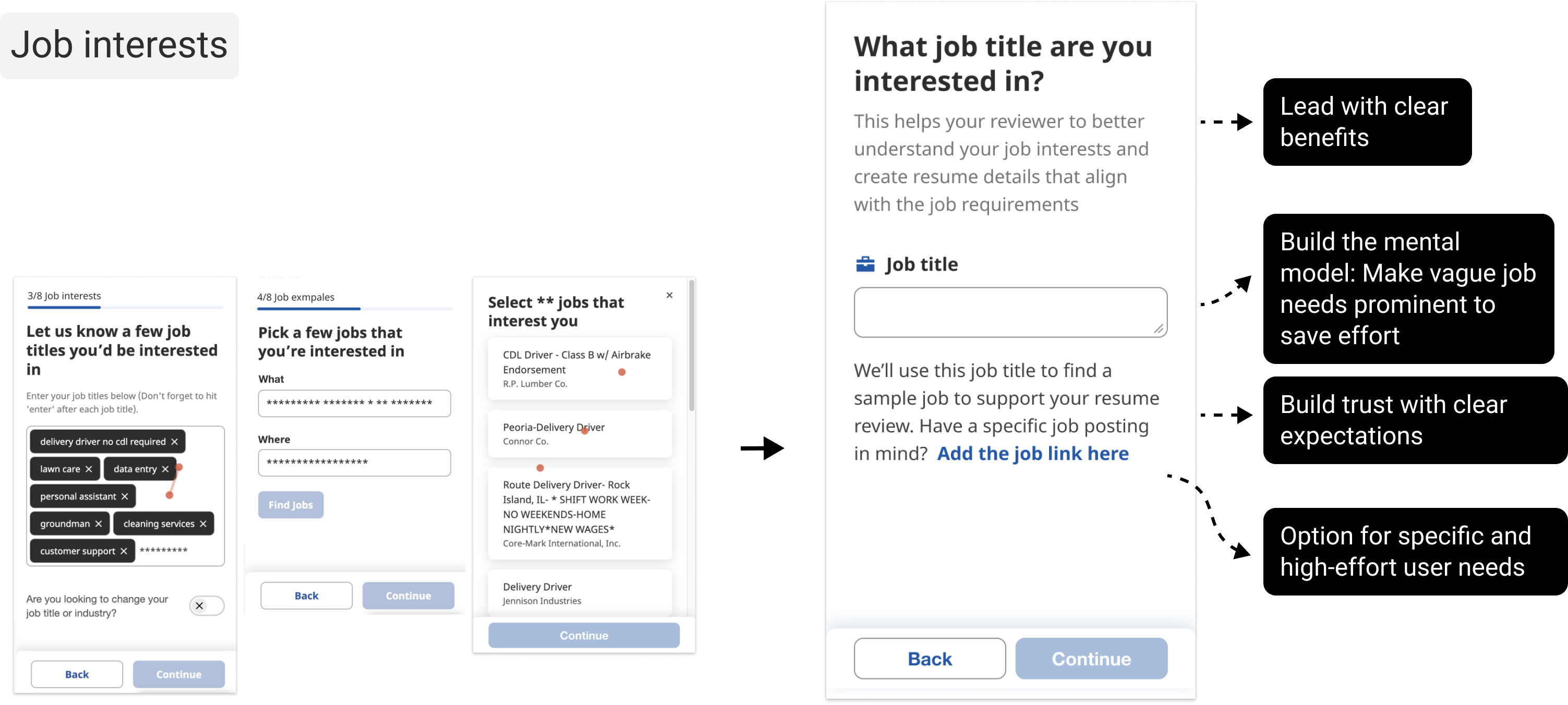
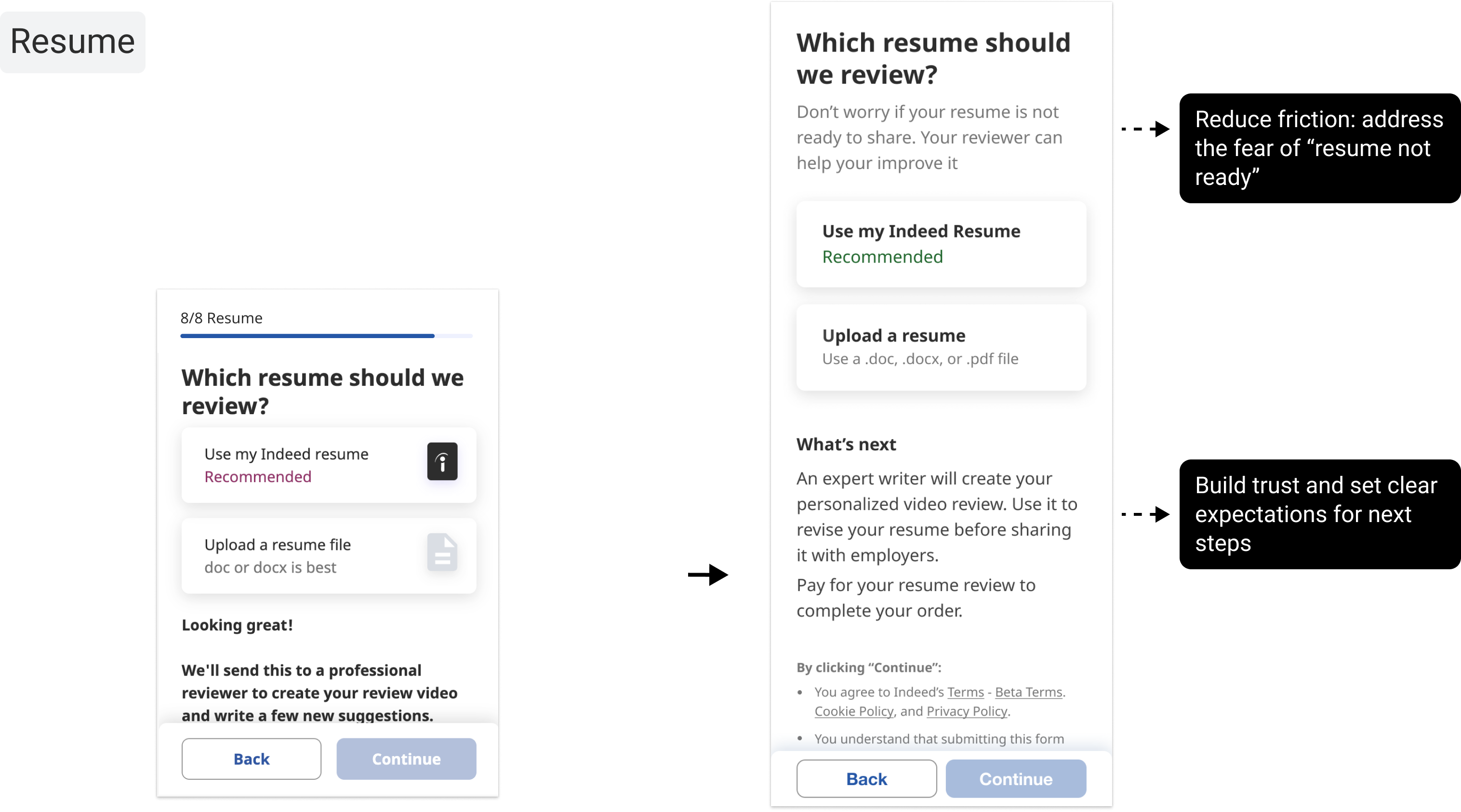
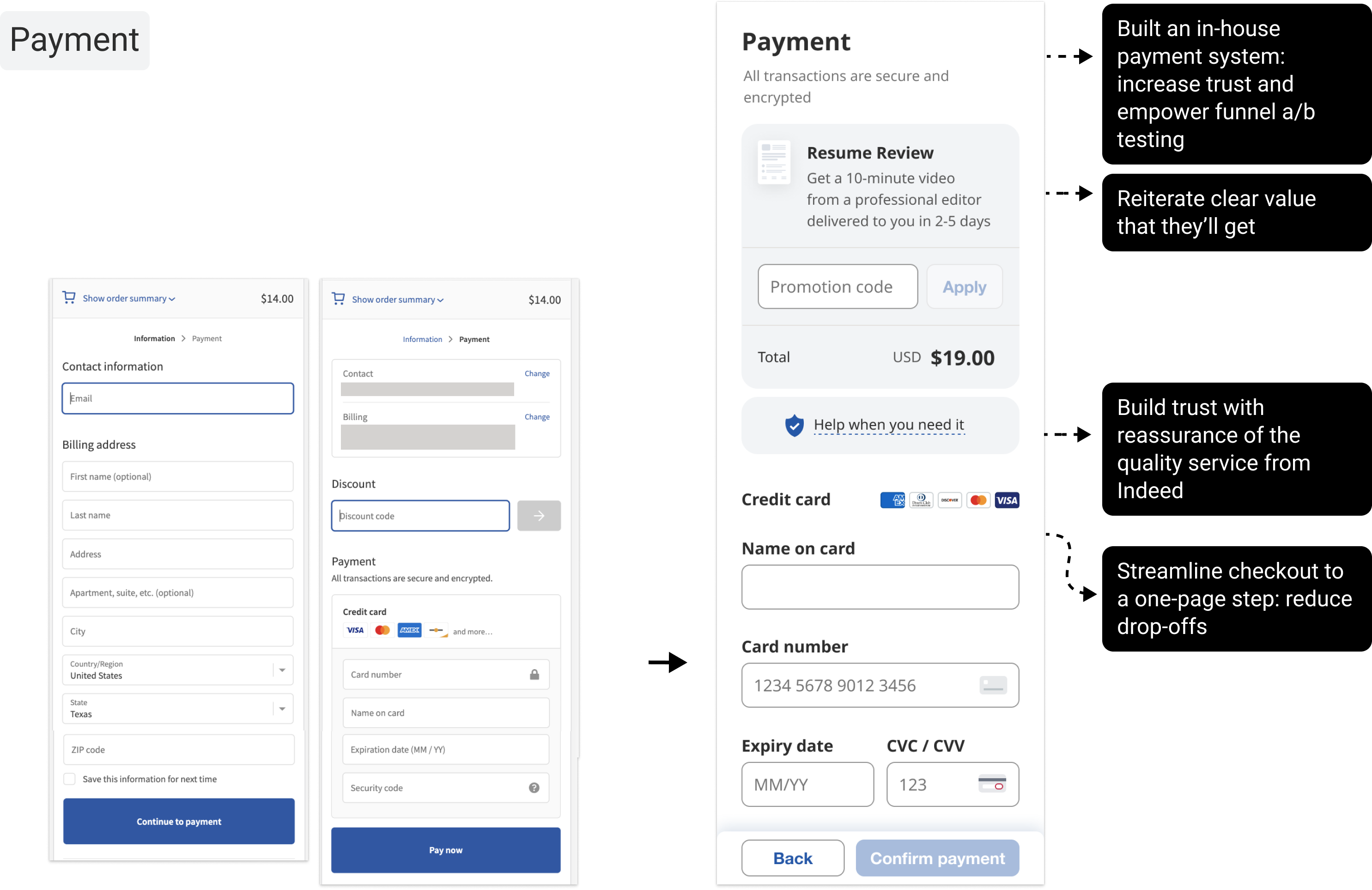
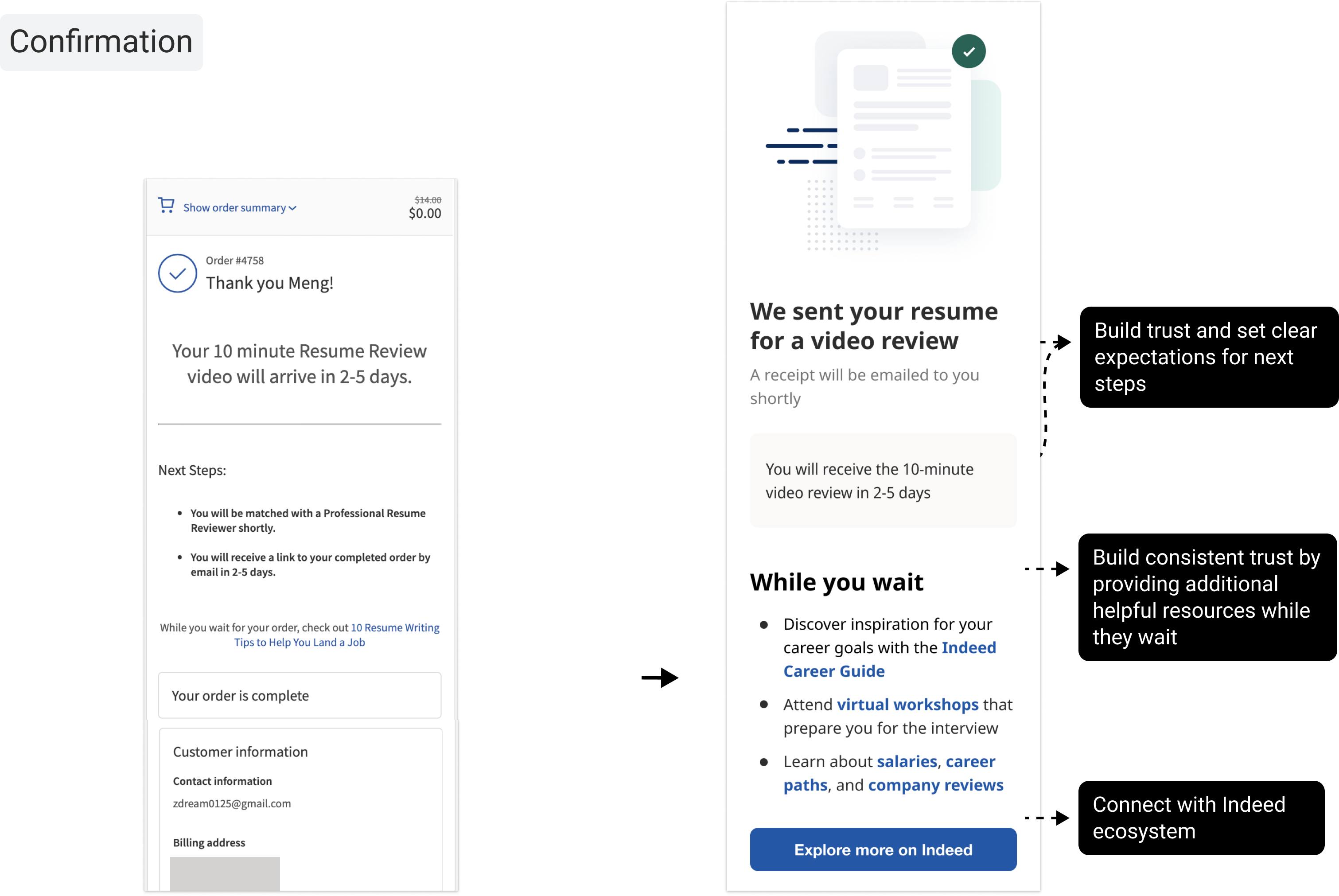
Adding new steps
Once we established solid four essential inputs, we can reimagine the overall funnel experience to further boost conversion with exceeding value delivered.
Reordering funnel steps
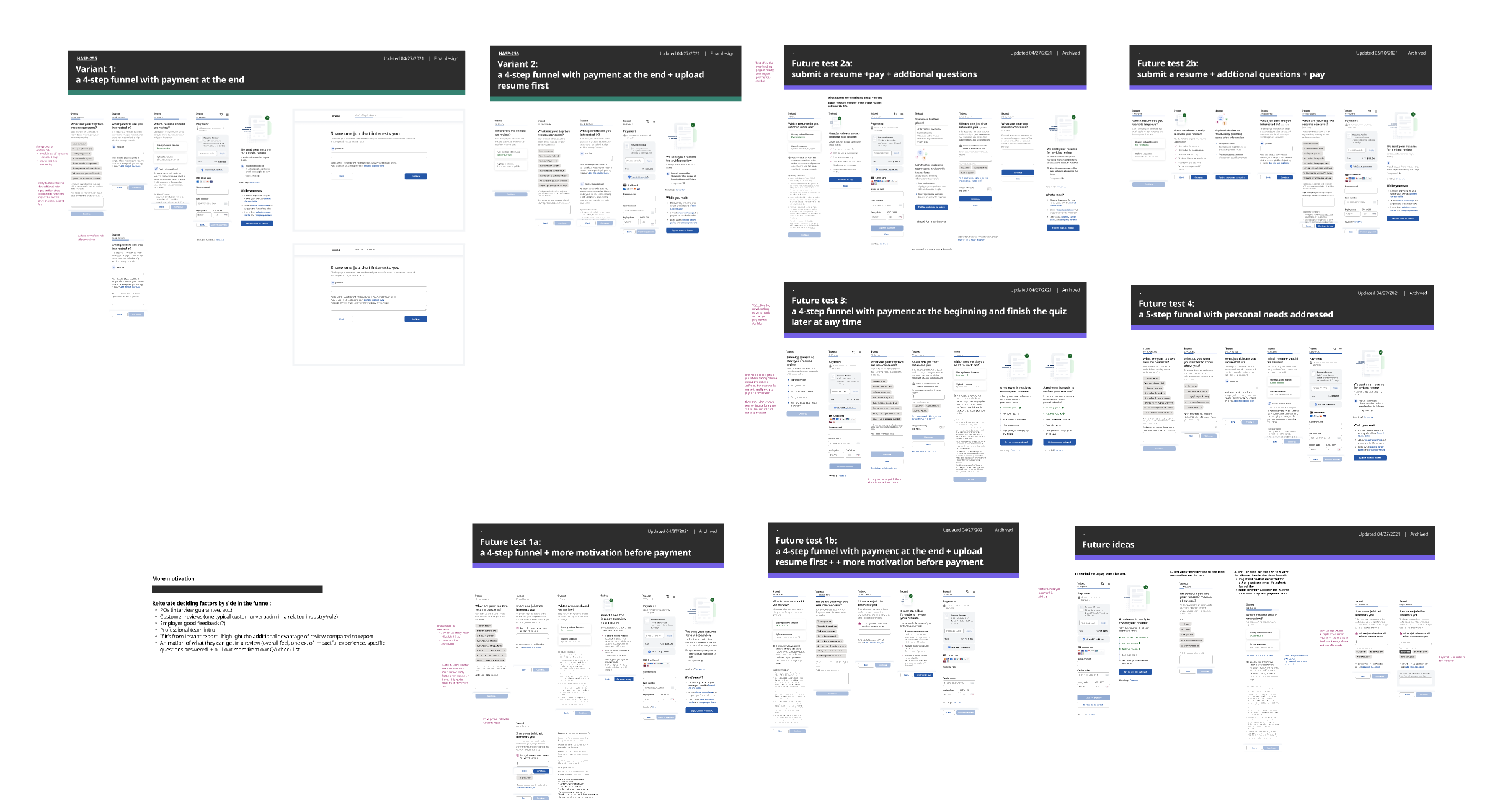
I proposed 10+ funnel exploratory experiment ideas with reordered steps to balance the right amount of value perception with conversion. We prioritized a few to run A/B tests.
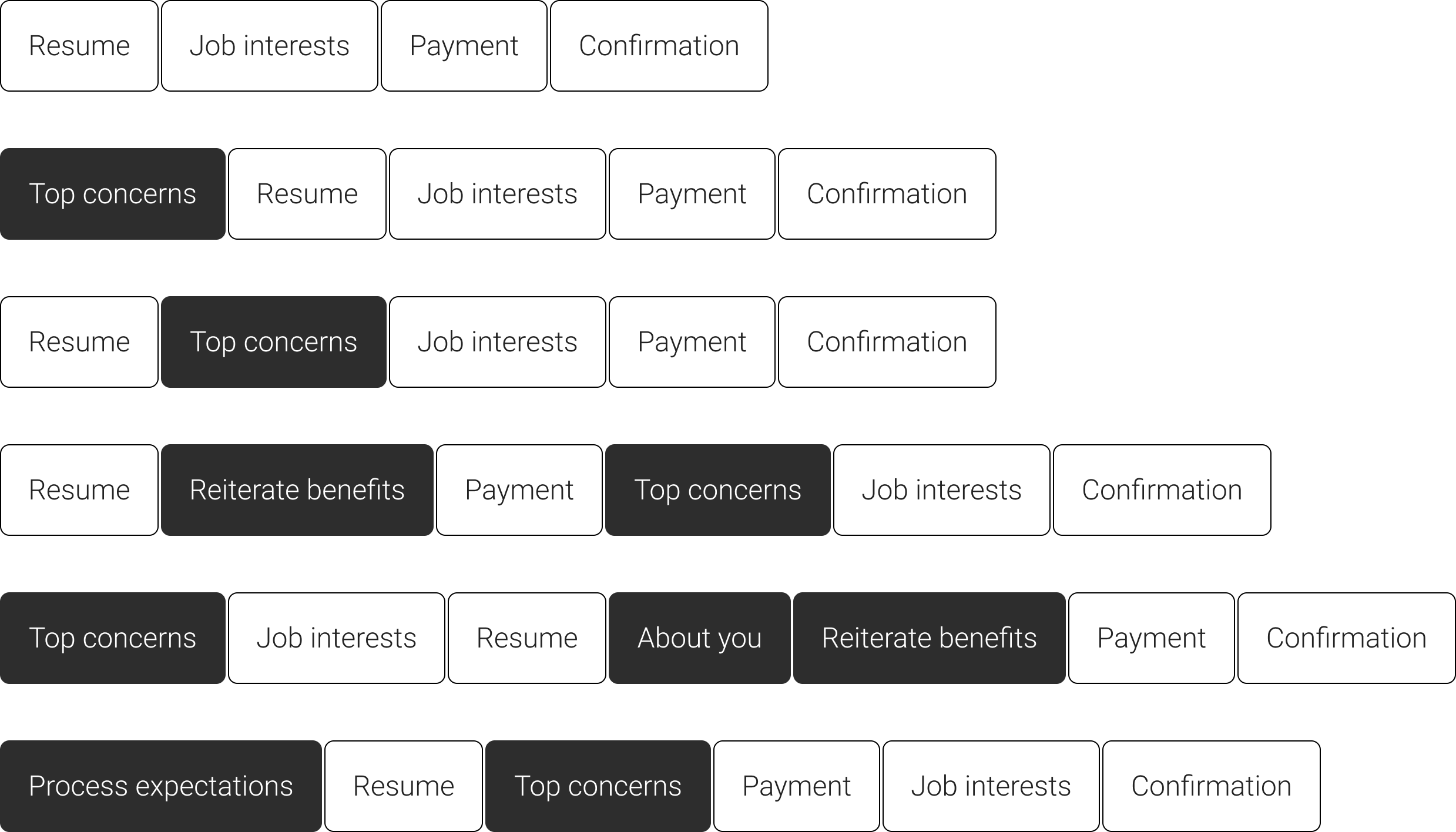
Winning variant: top concerns step + four essential inputs

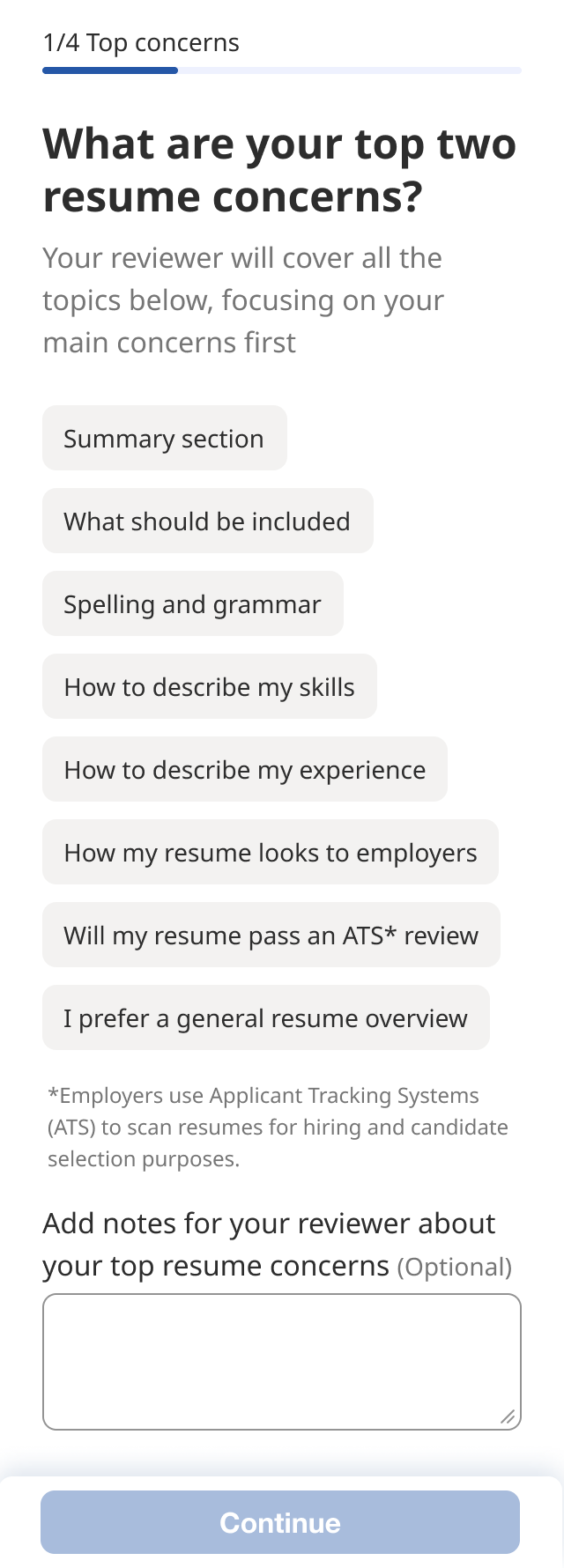
Outcome
- Resume Review funnel completion rate +188%
- Checkout conversion +22% on mobile, +11% on desktop
- Maintained high service quality (4.6/5 rating)
- Empowered reviewers with improved productivity
- Positive user feedback: user interviews revealed users appreciated the steps and value of the streamlined process.
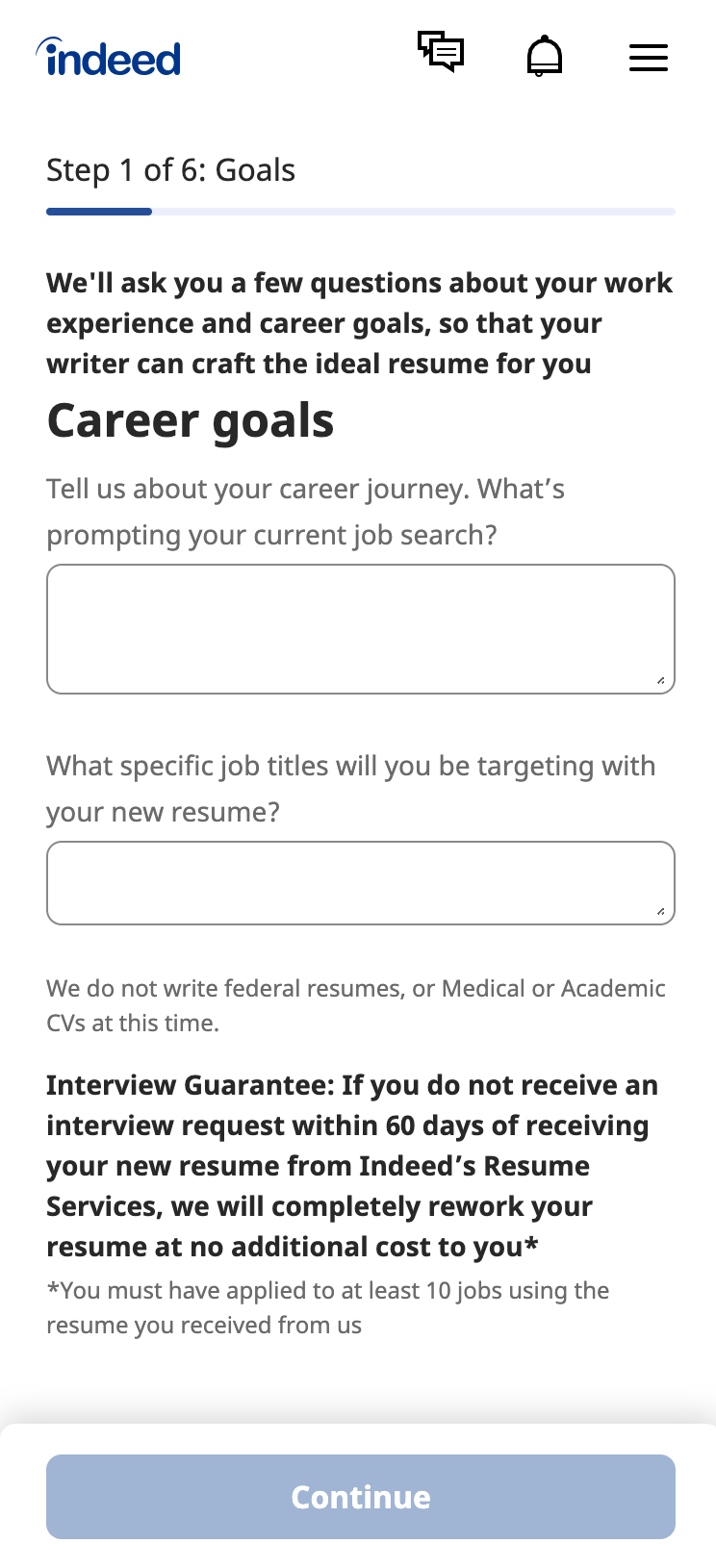
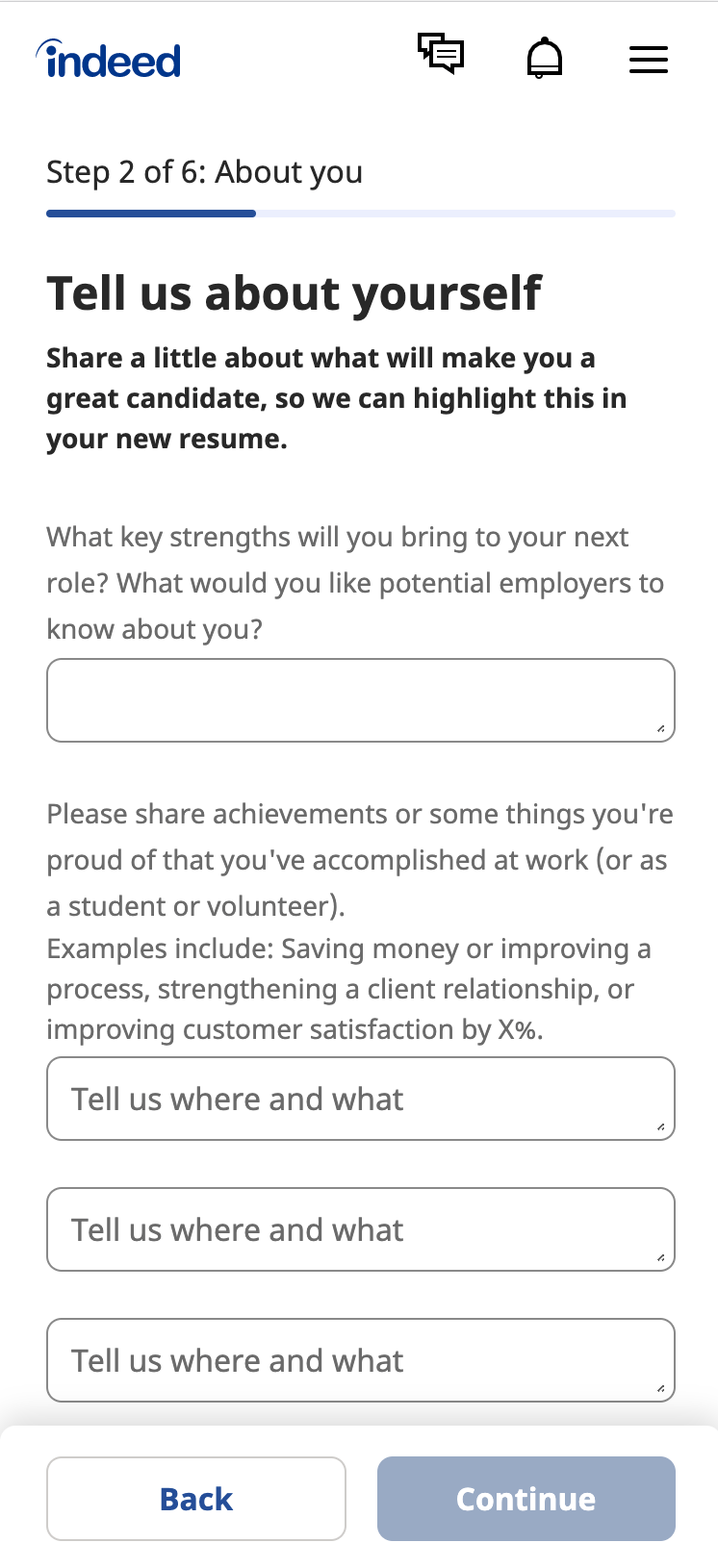
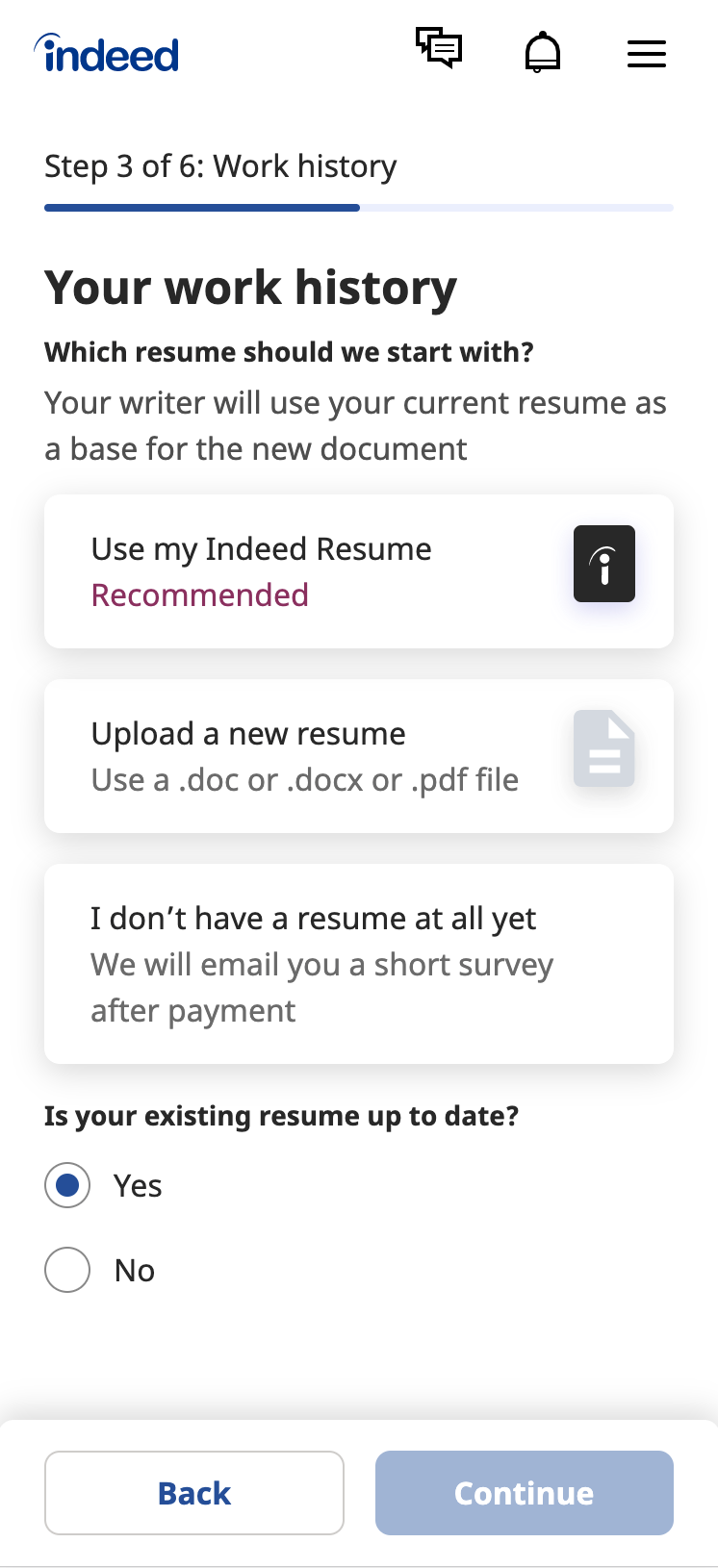
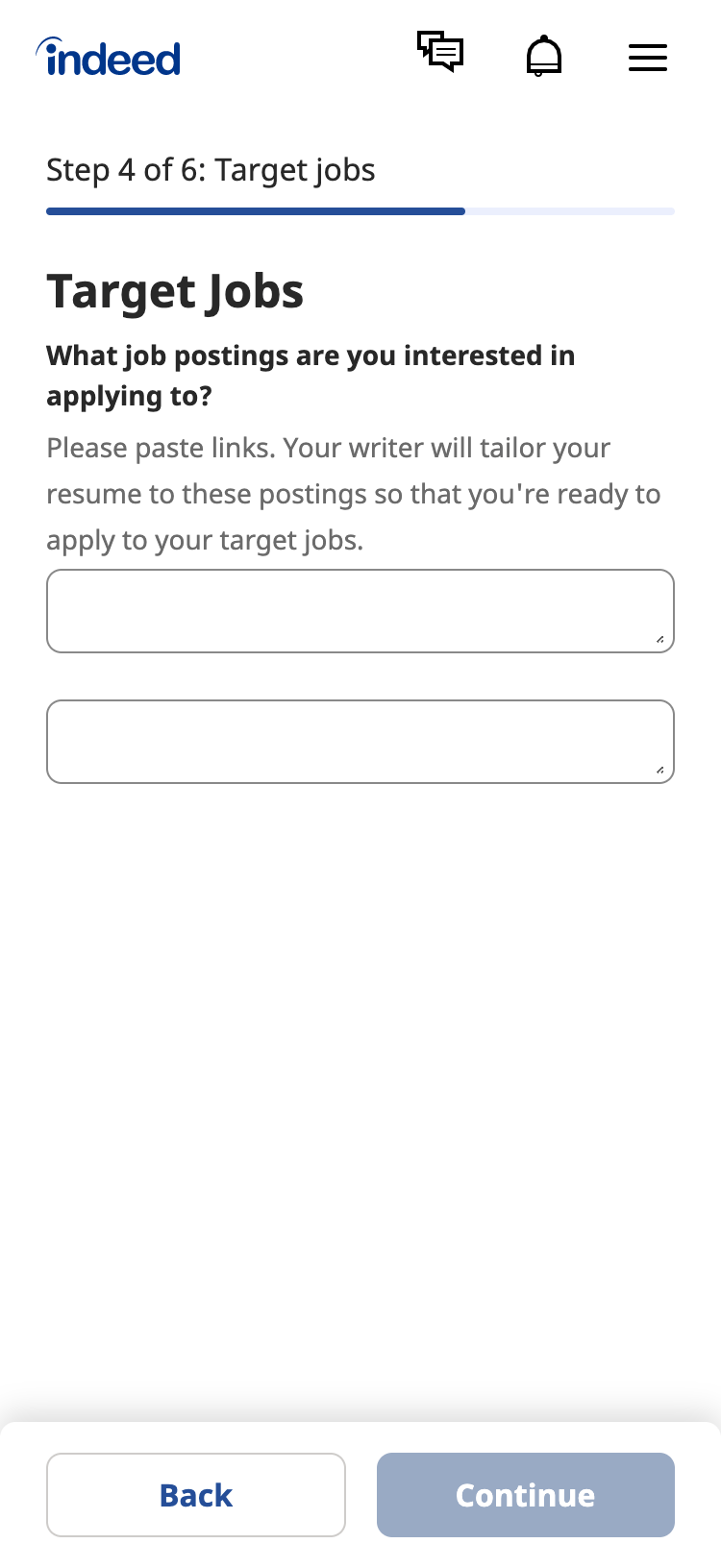
Solution 2: Redesign Resume Writing purchase funnel
Painpoints
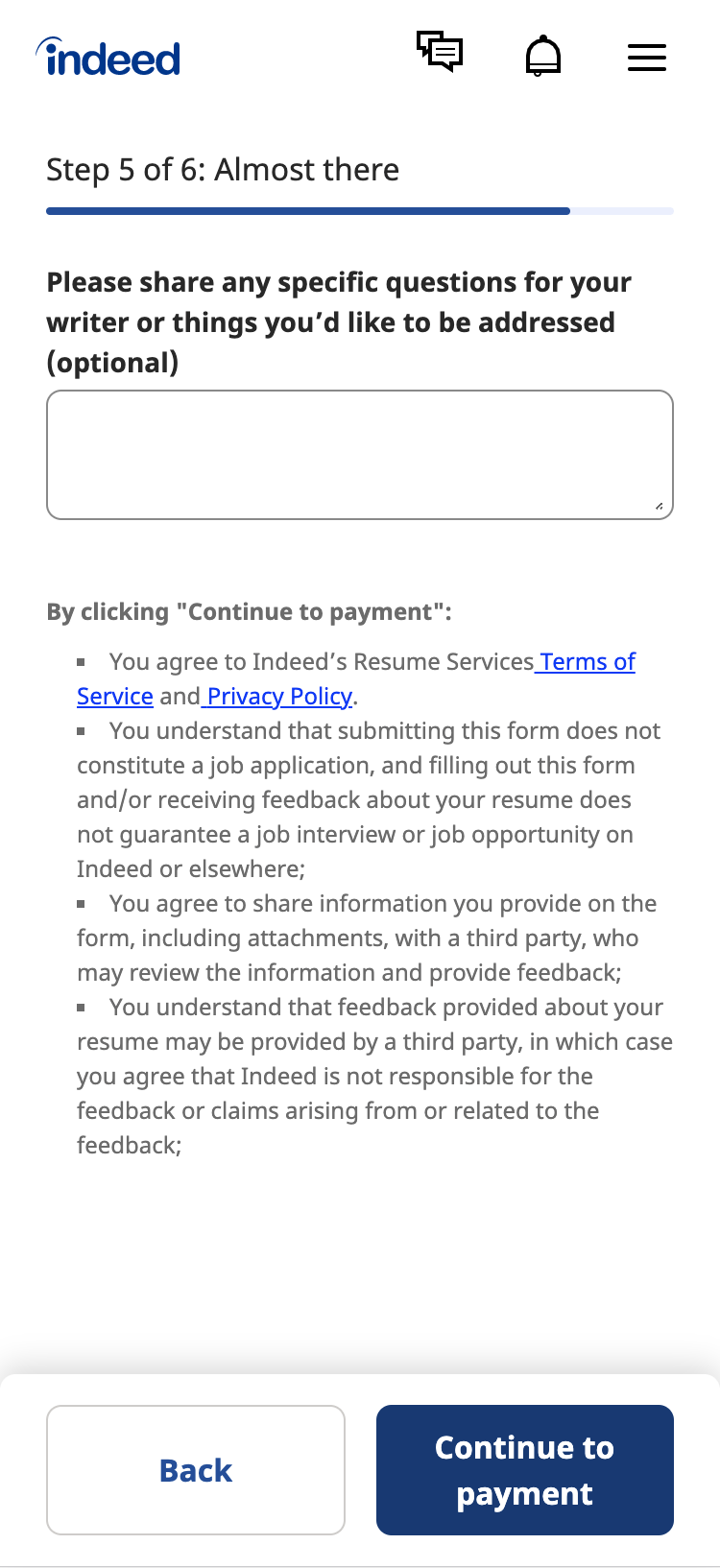
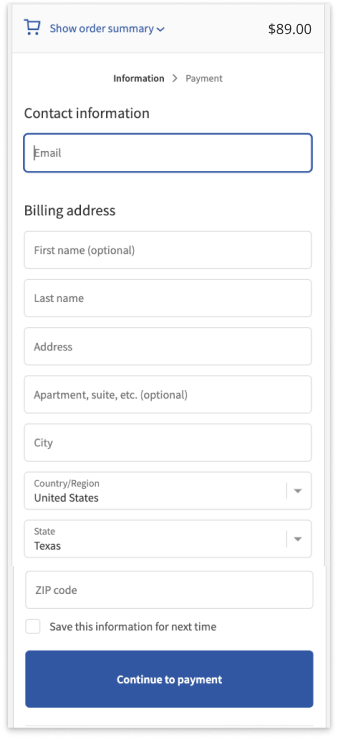
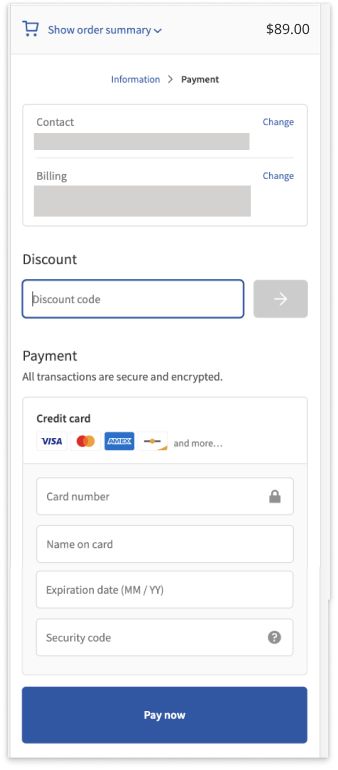
- Compared to resume reviews, the more expensive resume writing services presented additional complexities in funnel:
- 99% of users dropped off
- High-effort essential information input needs
- More trust and value perception needed

Opportunities
By turning challenges into opportunities, how might we:
- …better convey value and boost trust for complex decision-making?
- …balance the input effort & conversion with the quality of info collected?
Solution
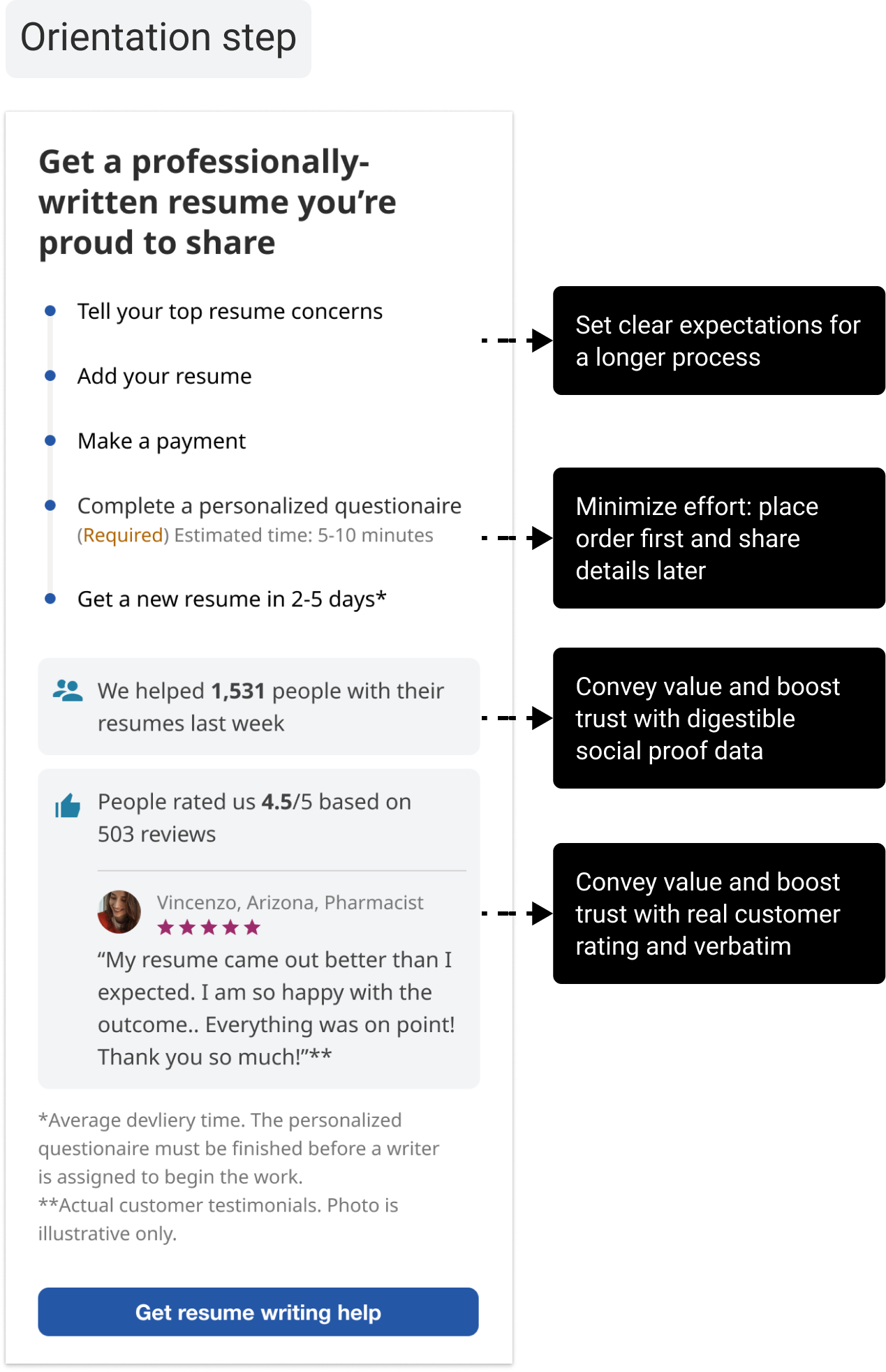
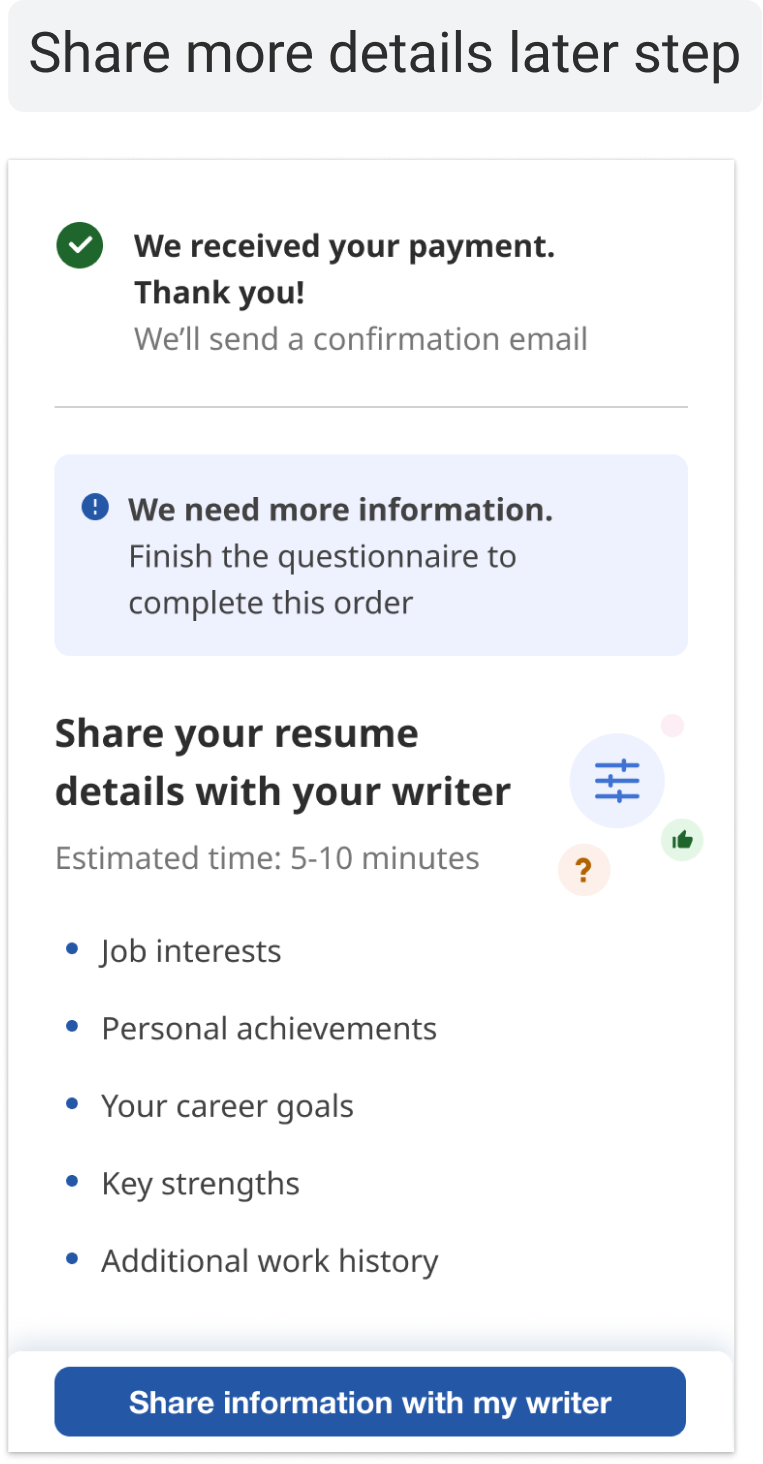
- Simplified a complex 7-step funnel with significant reduced input effort
- Improved trust-building elements
- Balanced input effort with information quality

Outcome
- Resume Writing funnel completion rate +355%
- Checkout conversion +68% on desktop, +45% on mobile
- Maintained high service quality (4.5/5 rating)
- Empowered editors with improved productivity
- Positive user feedback: Users appreciated the clearer flow and emphasis on trust-building
“I like that it gives me the steps, pretty easy. And I like that they helped 1,531 people with their resumes last week—that’s awesome!” -- Usability testing participant
Overall Outcomes
In its second year, Indeed Resume Services scaled into a robust, adjacent business within the ecosystem:
- Launched two new offerings while improving existing services
- Helped 4M+ job seekers improve their resumes
- Increased end-to-end funnel conversion rate from 0.5% to 2% (vs. typical professional/SaaS benchmarks of ~2-5%)
- Grew revenue 8X YoY (far exceeding typical stage growth 2X-4X)
- Facilitated 212K new account creations, with users 93% more likely to update resumes and 55% more likely to receive employer signals
"Those tips, programs, even the professional help and advice, really goes above and beyond what I have ever seen or been offered." — Resume Services user
Approach & Learnings
As the business design partner, I collaborated closely with Product to define the scaling strategy and led key initiatives in design, product analytics, user research, content, and cross-functional alignment.
My approach combined mixed-methods research with experimentation:
- Product analytics: heatmaps, traffic sources, funnel performance, reviews, post-purchase engagement, ecosystem impact
- User research: 5+ rounds of interviews & usability tests, session recordings analysis, surveys, heuristic evaluations, competitive analysis
- Experimentation: 10+ A/B tests & exploratory experiments
- Behavioral science-driven design: leveraging Fogg Behavior Model and Consumer purchase decision-making model to uncover user motivations
- Collaborative ideation: multiple ideation & design & prioritization workshops
I learned that the most impactful design solutions emerge from a deep integration of user needs, technical constraints, and business outcomes—and that effective scaling depends on data-driven decisions, strategic testing, and continuous learning.


Scaling Indeed Resume Services 8X in Year Two
Summary
Indeed’s first paid job seeker product Resume Services offered strong value but struggled in its first year to scale acquisition, conversion, engagement, and ecosystem impact. I led a redesign of the end-to-end service experience, applying behavioral design, mixed-methods research, and growth experimentation to uncover what drives user trust and decision-making. By the second year, the business achieved 8× revenue growth, rebuilt two services, expanded two new paid offerings, and supported 4M+ job seekers. End-to-end conversion improved from 0.5% to 2%, transforming Resume Services into a scalable business within the Indeed ecosystem.
My Role
Lead Designer
Company
Indeed
Date
2021
Scope
12 months; 23 XFN partners across PM, UXR, Content, Engineering, Data Science, QA, Marketing, Resume editing team, Visual design, and partner product teams
Background
Job seekers often feel anxious about presenting themselves effectively through their resumes, while employers struggle with receiving low-quality applications. Indeed Resume Services was developed to bridge this gap, offering both free and paid professional resume assistance.
In its first year, the service showed potential with ~9k users and a 0.5% end-to-end conversion rate. However, scaling the business required expanding user acquisition and improving conversion rates.
Shape Product Scaling Strategy
To address the challenges, I started with an opportunity mapping that combined quantitative data analytics und qualitative user insights to uncover opportunities and prioritize initiatives when joining the team.
Using a consumer purchase decision-making model, I defined the end-to-end user journey and identified three critical product-level challenges and opportunities:
- Need recognition stage – Despite having 20+ traffic sources, it was unclear why certain entry points significantly outperformed others.
- Purchase funnel stage – We were losing 99.5% of users from Homepage through the conversion funnel.
- Post-purchase stage – Our measurement of key behaviors, such as resume updates, and downstream impacts, like hiring outcomes, was limited.
Based on this mapping, I worked with product team to prioritized four strategic focus areas in year two, ultimately growing revenue 8X year-over-year. This case study focuses on the first three areas:
4.
Measure and amplify ecosystem impact: helped 4M+ job seekers improve their resumes
1. Improve Entry Points and Traffic
Problem
The business had over 20 internal and external entry points, but conversion rates varied dramatically. It was unclear when job seekers needed resume help most or why certain entry points performed better.
Strategy
Leveraging the Fogg Behavior Model (motivation, ability, prompt), I cross-referenced conversion data with qualitative insights to design an acquisition strategy:
- Identify high-impact moments in the user journey
- Boost user motivation
- Reduce friction
- Deliver the right prompts at the right time
Solution
We then ideated on motivation, ability, timing, and prompt messaging, and tested 7 high-impact acquisition moments across the Indeed ecosystem, including:
- When job seekers had strong apply intent
- When they were editing resumes
- When they faced rejections
Ideated on motivation, ability, and prompt timing based on behavioral science
Ideated on prompt messaging from customer review keyword analysis and data analysis
We targeted 7 high-impact acquisition moments across the Indeed ecosystem, addressing varying user motivation, ability, timing, and messaging. *The design styles varied due to brand identity changes.
Outcome
This strategy drove a 400X YoY increase in traffic volume in year two.
2. Boost Homepage Conversion
Problem
We offered four resume services on the homepage (including two new offerings), but qualitative research revealed key challenges:
- Low value perception and differentiation: “Which service should I choose, and how do they differ?”
- Low abilities to act: “I’m not ready to upload my resume yet.”
Behavioral data further highlighted the barriers:
- Weak above-the-fold appeal (only 25% scrolled down)
- High abandonment (>80% homepage drop-off)
- Usability issues
Strategy
To help users evaluate and select resume services effectively, we focused on five key strategies:
- Reduce high drop-offs
- Improve holistic value perception
- Deliver clear and differentiated value propositions
- Drive immediate actions
- Building dynamic homepage testing concepts
Solution
Reducing high drop-offs: make the first fold appealing
Prioritized high-impact content above the fold
Designed visual cues to encourage scrolling near the average fold
Improving holistic value perception: test homepage composition
Prioritized educational and trust-building content
Delivering clear and differentiated value propositions: iterate on Service & Pricing
Early concepts revealed value gaps, friction from resume unreadiness, and uncertainty in perceived outcomes. I then collaborated with marketing and content design to refine messaging and pricing structures.
After five iterations with extensive a/b testing and research studies:
- High comprehension and perceived value: users demonstrated a strong understanding of services and their differentiators
- Competitive pricing advantage: Indeed perceived as more affordable vs. alternatives
- Streamlined funnel start: users found the entry process straightforward and intuitive
Drive immediate actions: engaging service start modules
Placing engaging service start modules with actionable prompts prominently on the homepage
Building dynamic homepage concepts: iterative testing framework
As the product scaled, challenges grew: more complex decision-making, varying motivation, and risk of attention loss.
I partnered with visual design team to design and test multiple variations of each homepage module. Through iterative testing and recombination, we developed a scalable framework to adapt the homepage to different user groups and evolving needs.
Outcome
- 50% increase in homepage conversion rate
- Launched two new paid services
- Improved trust and value communication
- Established a scalable homepage testing framework for dynamic needs
"They do a pretty good job of covering everything and setting expectations. It really makes it easy to understand exactly what I'm getting and how much I’m paying. The process was very straightforward." — Usability testing participant
3. Improve the Purchase Conversion Funnel
Problem
Over 97% of users dropped off the purchase funnel due to:
- Lengthy and frustrating steps (especially on mobile)
- Low perceived value
- Trust and payment convenience issues
We redesigned the purchase funnel experiences for all four free and paid resume services to address the challenges and improve conversion. Here are two examples.
Solution 1: Redesign Resume Review purchase funnel
Painpoints
Through behavior analysis, user interviews, and conversion data analysis, I identified key challenges for both users and resume reviewers:
- Job seekers: excessive 11 steps; redundant questions; unclear value
- Resume reviewers: low-quality input; inefficient workflow
Opportunities
By turning challenges into opportunities, how might we:
- ...define the minimum required information for a quality resume review?
- ...make it easier to input information, especially on mobile?
- ...set clear expectations about the benefits?
- ...streamline workflows to empower reviewers to work efficiently?
Solution
- Reduced steps from 11 to 4 essential inputs
- Streamlined workflows for reviewers
- Made the experience from functional to exceptional by adding new steps and reordering steps
Adding new steps
Once we established solid four essential inputs, we can reimagine the overall funnel experience to further boost conversion with exceeding value delivered.
Reordering funnel steps
I proposed 10+ funnel exploratory experiment ideas with reordered steps to balance the right amount of value perception with conversion. We prioritized a few to run A/B tests.
Winning variant: top concerns step + four essential inputs
Outcome
- Resume Review funnel completion rate +188%
- Checkout conversion +22% on mobile, +11% on desktop
- Maintained high service quality (4.6/5 rating)
- Empowered reviewers with improved productivity
- Positive user feedback: user interviews revealed users appreciated the steps and value of the streamlined process.
Solution 2: Redesign Resume Writing purchase funnel
Painpoints
Compared to resume reviews, the more expensive resume writing services presented additional complexities in funnel:
- 99% of users dropped off
- High-effort essential information input needs
- More trust and value perception needed
Opportunities
By turning challenges into opportunities, how might we:
- …better convey value and boost trust for complex decision-making?
- …balance the input effort & conversion with the quality of info collected?
Solution
- Simplified a complex 7-step funnel with significant reduced input effort
- Improved trust-building elements
- Balanced input effort with information quality
Outcome
- Resume Writing funnel completion rate +355%
- Checkout conversion +68% on desktop, +45% on mobile
- Maintained high service quality (4.5/5 rating)
- Empowered editors with improved productivity
- Positive user feedback: Users appreciated the clearer flow and emphasis on trust-building
“I like that it gives me the steps, pretty easy. And I like that they helped 1,531 people with their resumes last week—that’s awesome!” -- Usability testing participant
Overall Outcomes
In its second year, Indeed Resume Services scaled into a robust, adjacent business within the ecosystem:
- Launched two new offerings while improving existing services
- Helped 4M+ job seekers improve their resumes
- Increased end-to-end funnel conversion rate from 0.5% to 2% (vs. typical professional/SaaS benchmarks of ~2-5%)
- Grew revenue 8X YoY (far exceeding typical stage growth 2X-4X)
- Facilitated 212K new account creations, with users 93% more likely to update resumes and 55% more likely to receive employer signals
"Those tips, programs, even the professional help and advice, really goes above and beyond what I have ever seen or been offered." — Resume Services user
Approach & Learnings
As the business design partner, I collaborated closely with Product to define the scaling strategy and led key initiatives in design, product analytics, user research, content, and cross-functional alignment.
My approach combined mixed-methods research with experimentation:
- Product analytics: heatmaps, traffic sources, funnel performance, reviews, post-purchase engagement, ecosystem impact
- User research: 5+ rounds of interviews & usability tests, session recordings analysis, surveys, heuristic evaluations, competitive analysis
- Experimentation: 10+ A/B tests & exploratory experiments
- Behavioral science-driven design: leveraging Fogg Behavior Model and Consumer purchase decision-making model to uncover user motivations
- Collaborative ideation: multiple ideation & design & prioritization workshops
I learned that the most impactful design solutions emerge from a deep integration of user needs, technical constraints, and business outcomes—and that effective scaling depends on data-driven decisions, strategic testing, and continuous learning.